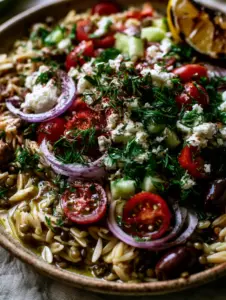
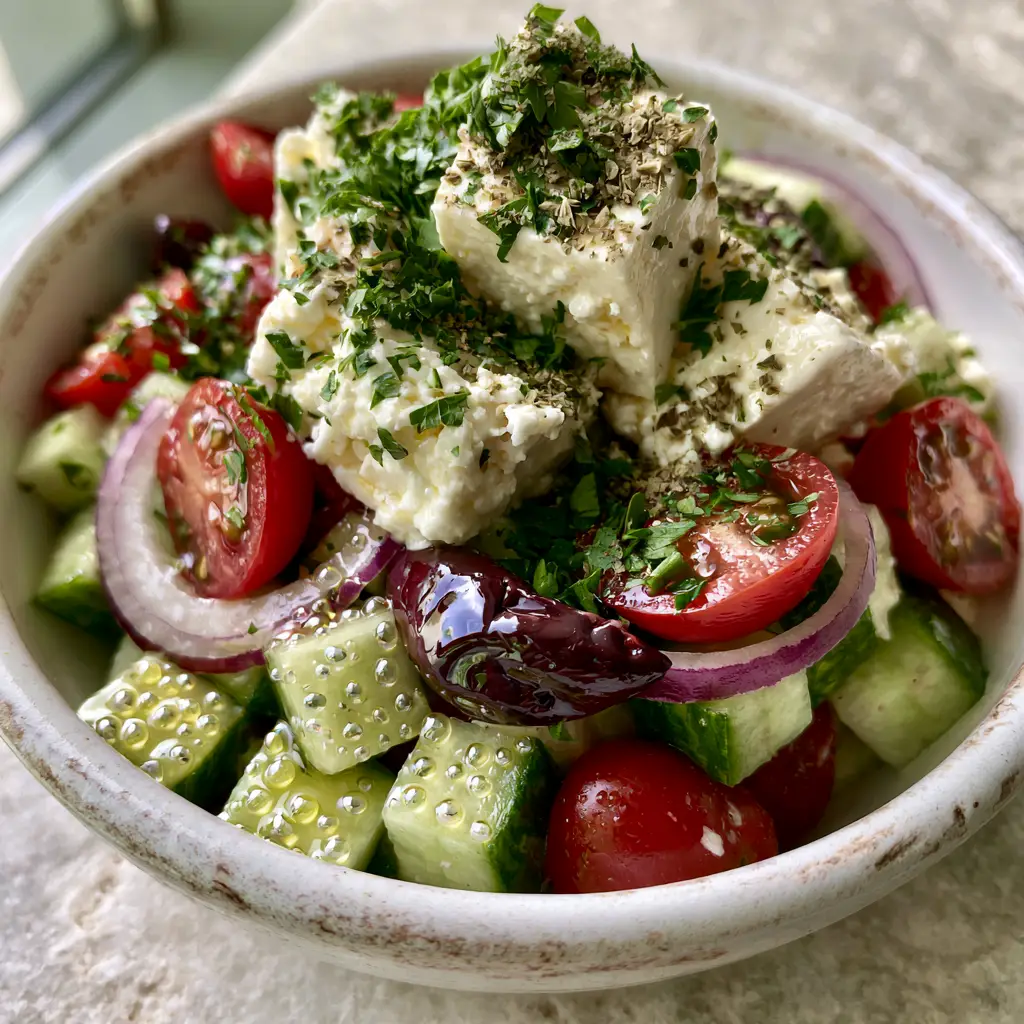
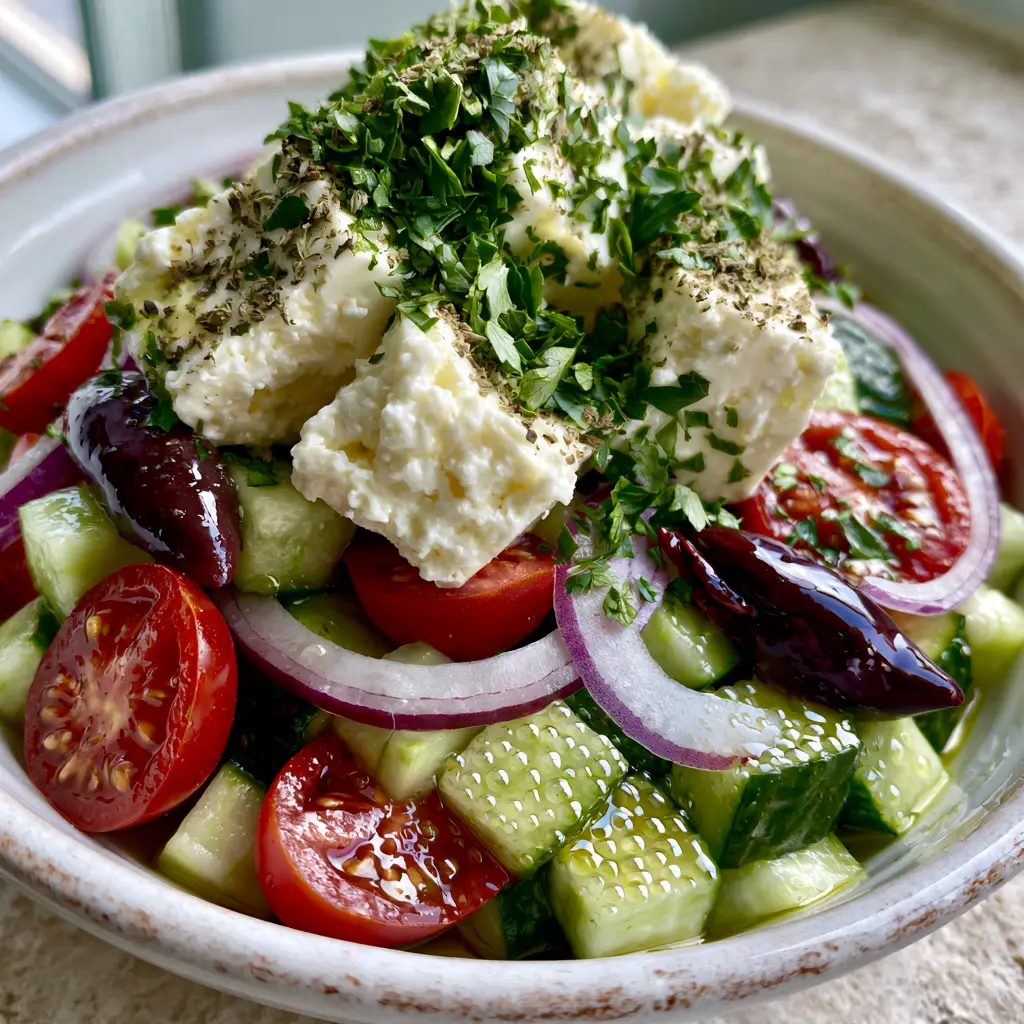
There is a specific, visceral joy in a Mediterranean Feta Salad that has been prepared with forensic attention to texture and temperature. Imagine a rustic white ceramic bowl, catching the soft, bright natural side-lighting of a late afternoon. Inside, a dense layer of vibrant, ultra-crisp cubed Persian cucumbers and halved bright red heirloom cherry tomatoes forms the foundation of a dish that is as much about the “crunch” as it is about the “cream.”
This isn’t your average soggy side dish; it is a masterclass in culinary contrast. The star of the show—large, thick cubes of creamy white Greek feta cheese—sits proudly atop the vegetables, dusted with finely chopped flat-leaf parsley and fragrant dried oregano. As you look closer, you notice a light, glistening lemon-olive oil vinaigrette clinging to the surfaces as tiny, shimmering droplets, highlighting the freshness of every ingredient. This Mediterranean Feta Salad is designed to be a high-definition flavor experience.
Whether you are looking for a quick, nutrient-dense lunch or a sophisticated centerpiece for your next gathering, the balance of salty olives, acidic tomatoes, and cooling cucumbers offers a profile that is both timeless and invigorating. By following this guide, you will learn the professional techniques required to keep your vegetables crisp and your vinaigrette perfectly emulsified for that signature “glistening” look.
The Sensory Appeal and Nutritional Power of This Vibrant Bowl
- Structural Integrity: By using Persian cucumbers, we ensure a higher skin-to-flesh ratio, providing a superior “snap” in every bite compared to larger, waxier varieties.
- Color Theory in Cooking: The use of heirloom cherry tomatoes provides a spectrum of reds and oranges that contrast beautifully against the dark purple of the whole pitted Kalamata olives.
- The Creaminess Factor: High-quality Greek feta, served in large cubes rather than small crumbles, provides a luxurious mouthfeel that balances the sharp acidity of the lemon.
- Aromatic Finishing: The combination of fresh flat-leaf parsley and dried oregano flakes creates a layered herbal profile that hits both the nose and the palate simultaneously.
Sourcing the Finest Components for a Professional Result
To achieve the visual and textural standard of an elite Mediterranean Feta Salad, your ingredient selection must be uncompromising. Each element plays a structural and flavor-based role in the final composition.
Persian Cucumbers: You will need 4-5 (approx. 450g) Persian cucumbers. These are preferred over English or Field cucumbers because their seeds are nearly non-existent and their skin is thin and sweet, requiring no peeling.
Heirloom Cherry Tomatoes: Seek out 2 cups (300g) of vibrant heirloom varieties. These offer a more complex sugar-to-acid ratio than standard red grapes tomatoes, adding “pops” of sweetness that cut through the salty feta.
Creamy Greek Feta: Purchase 7 oz (200g) of feta sold in brine. For this specific recipe, we are looking for large, thick cubes rather than crumbles to maintain the visual gravity described in our blueprint.
Red Onion: Half of a medium red onion (approx. 60g). To achieve those “paper-thin moons,” you will need to slice them against the grain using a mandoline or a very sharp chef’s knife.
Kalamata Olives: 1/2 cup (75g) of whole, pitted Kalamata olives. Their glossy, dark purple exterior and rich, wine-like flavor are essential for the Mediterranean profile.
Extra Virgin Olive Oil: 1/4 cup (60ml) of high-quality, cold-pressed oil. This forms the base of our glistening vinaigrette and provides the healthy fats required for nutrient absorption.
Fresh Lemon Juice: 2 tbsp (30ml) of freshly squeezed juice. Avoid bottled juice at all costs; the citric acid in fresh lemons provides the “shimmer” and brightness seen on the vegetable surfaces.
Herbs and Seasoning: 1/4 cup (10g) finely chopped flat-leaf parsley, 1 tsp (2g) dried oregano, 1/2 tsp (3g) sea salt, and 1/2 tsp (1g) freshly cracked black pepper. The “cracked” nature of the pepper is vital for visual texture.
Essential Kitchen Arsenal for Precision Slicing
Achieving the look of a handheld high-end smartphone photo requires precision. To get those perfect cubes and paper-thin onions, certain tools are non-negotiable.
First, a sharp Chef’s Knife is required for cubing the cucumbers into uniform 1/2-inch pieces. Dull knives will bruise the cell walls of the cucumber, leading to water loss and a soggy salad. A Mandoline Slicer is highly recommended for the red onions to ensure they are thin enough to be translucent.
You will also need a Rustic White Ceramic Bowl. The neutral, bright background of the bowl makes the colors of the Mediterranean Feta Salad pop. Finally, a Small Glass Jar is the best tool for emulsifying the vinaigrette—shaking the oil and lemon juice together creates the tiny droplets that give the salad its shimmering appearance.
The Culinary Roadmap to a Perfectly Balanced Bowl
Follow these steps to move from raw ingredients to a visually stunning, professional-grade salad. We focus on the order of operations to preserve the crispness of the vegetables.
Step 1: Preparing the Vegetable Foundation
Start by washing and thoroughly drying your Persian cucumbers and heirloom tomatoes. Any residual water on the surface will dilute the vinaigrette and prevent it from “clinging” to the vegetables. Cube the cucumbers into 1/2-inch (1.25cm) pieces, ensuring they are uniform. Slice the heirloom tomatoes in half vertically to reveal their juicy interior.
Next, use your mandoline to slice the red onion into paper-thin moons. If the onion flavor is too sharp for your preference, you can soak the slices in ice water for 5 minutes and then pat them dry; this removes the sulfurous bite while maintaining the crunch.
Step 2: Creating the Shimmering Lemon-Herb Vinaigrette
In a small jar or bowl, combine the extra virgin olive oil, fresh lemon juice, and a pinch of salt. Whisk or shake vigorously until the mixture is emulsified—this means the oil and acid have bonded into a cohesive, slightly thickened liquid. This is the secret to getting those “tiny, shimmering droplets” on the surface of your Mediterranean Feta Salad.
Step 3: Assembly and The Feta Focal Point
In your rustic white bowl, toss the cucumbers, tomatoes, onions, and whole Kalamata olives with about two-thirds of the dressing. Mix gently so you don’t break the tomatoes. Once the vegetables are glistening, place your large cubes of creamy Greek feta on top. Avoid tossing the feta with the vegetables, as this can turn the dressing cloudy and break the beautiful cubes.
Step 4: The Final Flourish
Dust the entire bowl with your finely chopped flat-leaf parsley and dried oregano flakes. Finish with a heavy sprinkle of freshly cracked black pepper. Drizzle the remaining vinaigrette directly over the feta cubes to give them a glossy sheen. The result should look like a macro photograph: sharp, vibrant, and incredibly fresh.
Professional Techniques for Maximum Crunch and Flavor
“The secret to a world-class Mediterranean salad isn’t just the ingredients, but the management of moisture. Salt draws out water, so only season the vegetables immediately before serving.”
- Chill Your Bowl: Place your ceramic bowl in the fridge for 15 minutes before assembling. A cold bowl keeps the cucumbers “ultra-crisp” and prevents the feta from softening too quickly.
- The Feta Choice: Always choose “Block Feta” in brine. Pre-crumbled feta is coated in anti-caking agents (like cellulose) which prevents it from having that “creamy” texture described in our visual prompt.
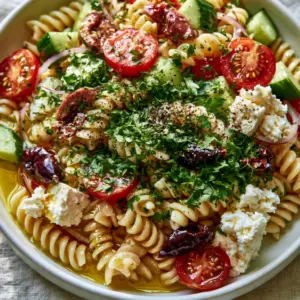
- Internal Link Inspiration: If you love the flavors of this dish but want something heartier, consider trying a Mediterranean pasta salad which uses a similar flavor profile but adds al dente noodles.
- Dry the Herbs: Ensure your parsley is bone-dry before chopping. If it is damp, it will clump together rather than providing that beautiful “heavy dusting” look.
Maintaining Freshness: Storage and Prep-Ahead Guides
The Mediterranean Feta Salad is best enjoyed within 30 minutes of assembly. However, if you need to prepare it in advance, there are professional ways to do so without sacrificing quality.
Prep-Ahead Strategy: You can chop the cucumbers, halve the tomatoes, and slice the onions up to 8 hours in advance. Store them in separate airtight containers in the refrigerator. Do not mix them, as the tomato juices will soften the cucumbers.
Storage: Leftover salad can be kept in the fridge for up to 24 hours. Be aware that the salt in the dressing will cause the vegetables to release water, so you may need to drain the bowl and add a fresh squeeze of lemon before eating. This dish does not freeze well due to the high water content of the cucumbers and tomatoes.
Perfect Pairings and Mediterranean Inspirations
While this salad is a powerhouse on its own, it also serves as a versatile side dish. For a complete summer spread, pair it with other vibrant options from our collection of summer salad recipes.
If you prefer a simpler version without the cheese, our classic cucumber, onion, and tomato salad is a fantastic alternative. For those who enjoy a bit more plant-based protein, this salad pairs beautifully alongside a Mediterranean lentil and orzo salad or a refreshing refreshing cold bean salad.
Protein-wise, this salad is the ultimate companion to grilled lemon-oregano chicken skewers or a pan-seared piece of branzino. The acidity of the vinaigrette acts as a palate cleanser for rich, charred meats.
Your Burning Questions Answered
Yes, but Persian cucumbers are preferred for their higher skin-to-flesh ratio which keeps the salad crispier. If using English cucumbers, you may want to seed them first.
The ‘shimmer’ comes from proper emulsification. Shake your oil and lemon juice vigorously in a jar until they combine into a slightly thickened, unified liquid before drizzling.
Slice them paper-thin using a mandoline and soak the slices in ice water for 5-10 minutes. This removes the harsh sulfurous bite while retaining the crunch.
Yes, for safety and ease of eating, always use pitted olives. Keeping them whole, however, provides a better visual contrast and prevents the salad from turning too purple.
Block feta kept in brine is creamier and lacks the anti-caking powders found in pre-crumbled varieties, giving you a better mouthfeel and a cleaner look.
The Official Mediterranean Feta Salad Recipe Card
Ready to create this visual masterpiece? This recipe follows our forensic blueprint to ensure your final result matches the high-end smartphone photography style—vibrant, crisp, and glistening with flavor.
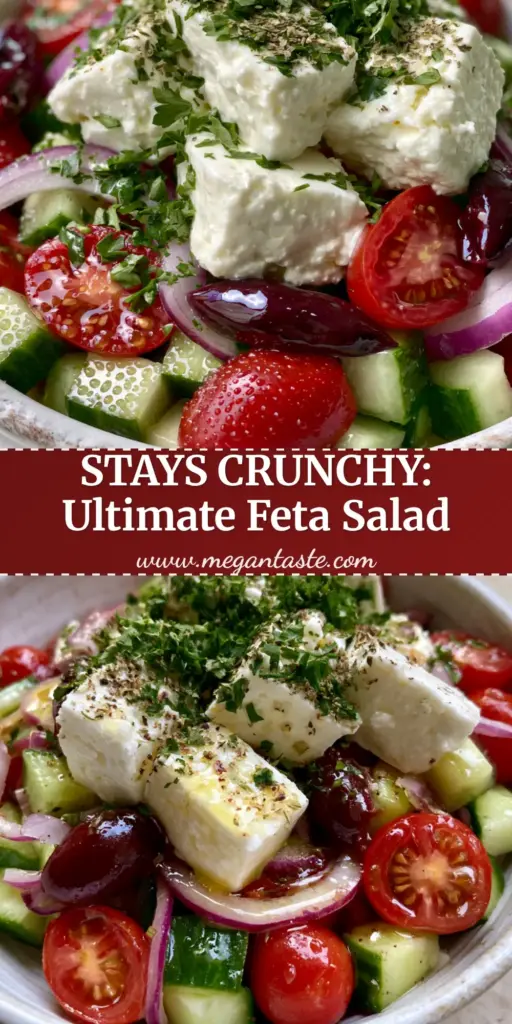
Mediterranean Feta Salad with Crisp Persian Cucumbers and Heirloom Tomatoes
Ingredients
Equipment
Method
- Wash and dry all produce. Cube Persian cucumbers into 1/2-inch pieces. Halve the heirloom cherry tomatoes. Slice red onion into paper-thin moons using a mandoline.
- In a small glass jar, combine olive oil, fresh lemon juice, and sea salt. Shake vigorously for 30 seconds until the mixture is thick and emulsified.
- In a large ceramic bowl, toss cucumbers, tomatoes, onions, and olives with most of the dressing. Place thick cubes of feta on top. Sprinkle with parsley, oregano, and cracked black pepper. Drizzle remaining dressing over the feta.
Notes
Only add salt and dressing immediately before serving to keep cucumbers crisp.
Closing & Call to Action
Creating a Mediterranean Feta Salad that looks as good as it tastes is all about respecting the ingredients. By focusing on the “macro” details—the shimmering droplets of oil, the paper-thin onions, and the creamy cubes of feta—you elevate a simple salad into a culinary event. We hope this guide helps you bring a touch of the Mediterranean sun into your kitchen.
If you enjoyed this recipe, please leave a comment below and let us know how your salad turned out! Don’t forget to follow us on Pinterest for more visually stunning recipe inspiration. Share your creations by tagging us—we love to see your “glistening” results!