There is a specific kind of magic that happens when pantry staples meet fresh, vibrant produce. This Asian ramen salad is the ultimate testament to that culinary harmony, delivering a symphony of textures that range from the delicate crunch of shredded Napa cabbage to the aggressive, brittle snap of oven-toasted noodles. If you have ever felt underwhelmed by soggy, uninspired salads, this recipe is your redemption.
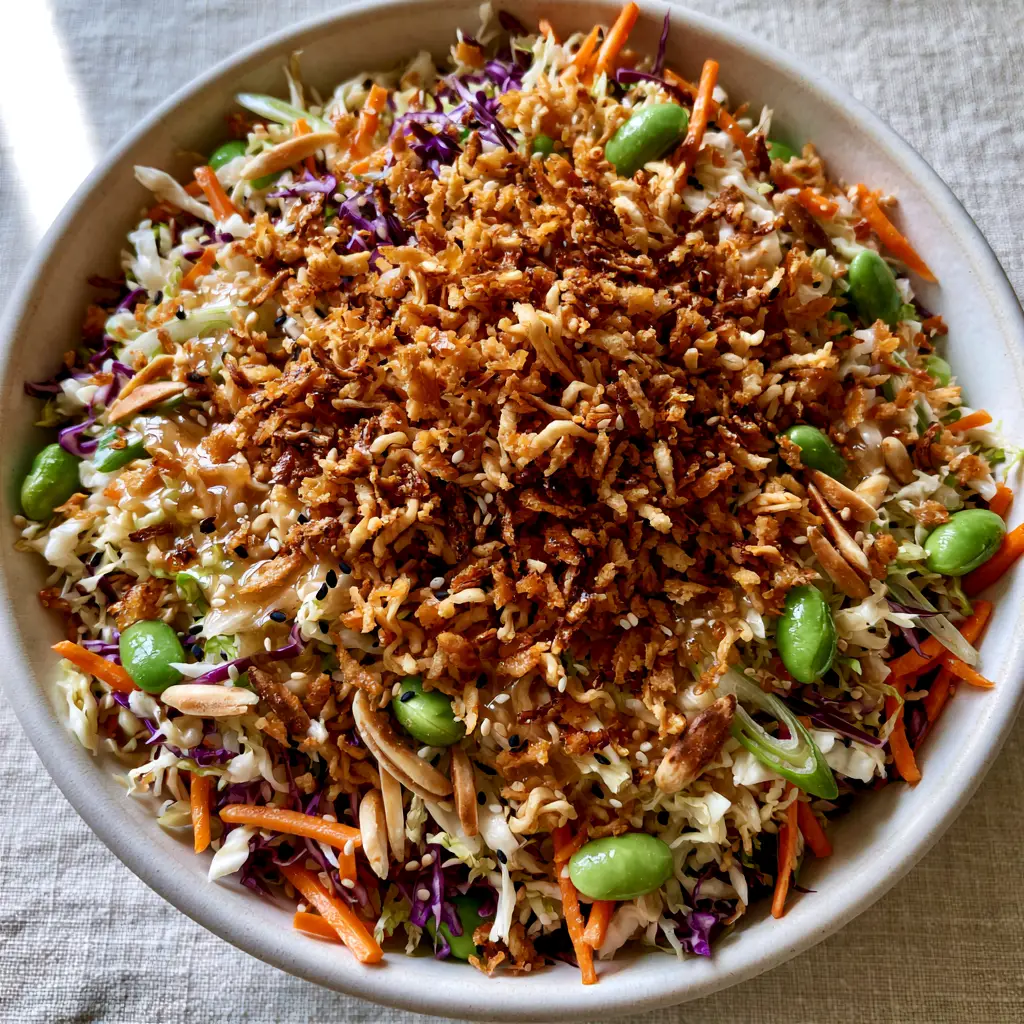
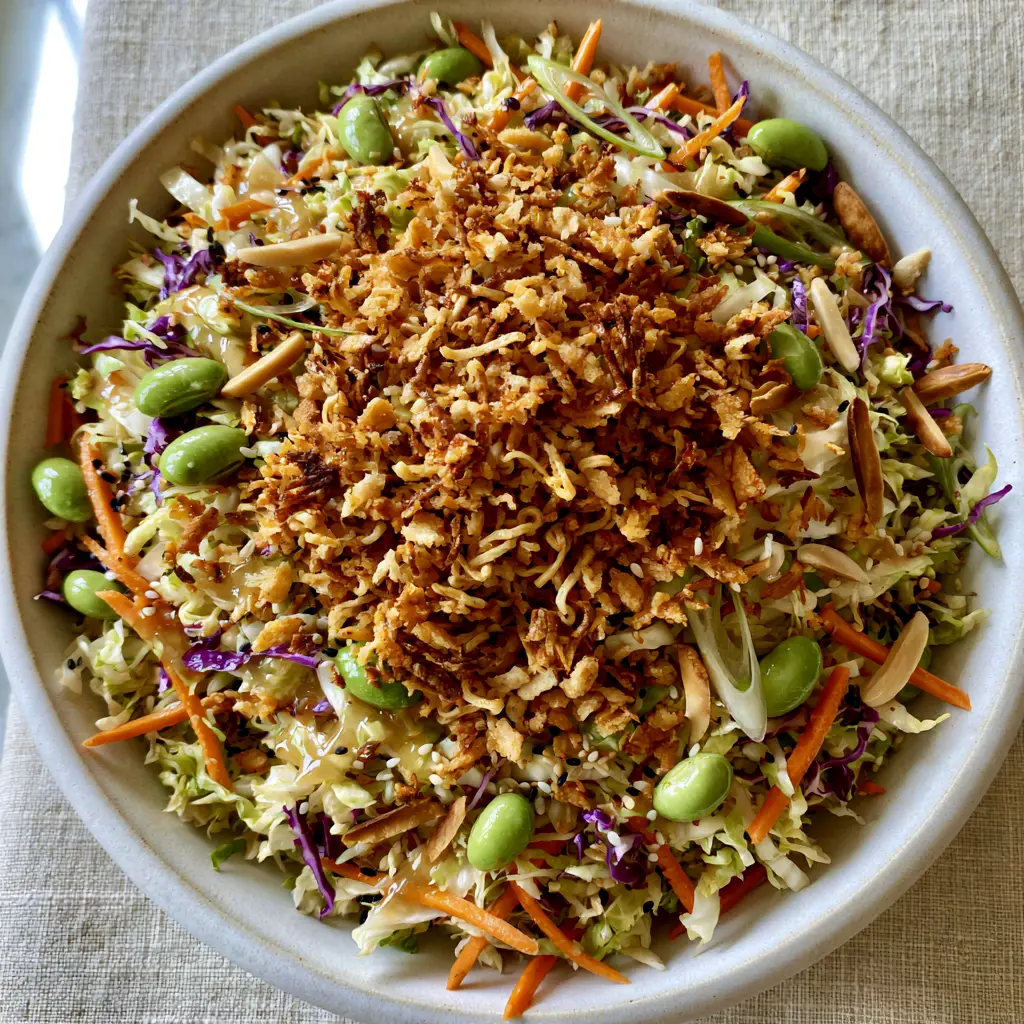
Visually, this dish is a masterpiece of color and light. Imagine a minimalist white stoneware bowl overflowing with ribbons of deep purple and pale green cabbage, interspersed with bright orange matchstick carrots. The crowning glory is a heap of deeply golden-brown ramen crumbles that glisten under a translucent, glossy ginger-sesame dressing. Every forkful offers a new discovery, from the creamy pop of steamed edamame to the nutty earthy notes of toasted slivered almonds and dual-toned sesame seeds.
The Irresistible Allure of the Ultimate Crunch
- Unrivaled Texture Profiles: We utilize three distinct levels of crunch—raw vegetable snap, toasted nut density, and the airy, brittle shatter of baked ramen noodles.
- Maillard-Driven Flavor: By toasting the noodles and almonds until they reach a deep golden hue, we unlock savory, nutty aromatic compounds that raw ingredients simply cannot provide.
- Visual Vibrancy: The contrast between the bright green edamame and the rich purple cabbage makes this a centerpiece-worthy side dish for any gathering.
- Balanced Umami Dressing: Our translucent ginger-sesame vinaigrette provides a glossy coating that hydrates the vegetables without making the crunchier elements soggy.
The Crunchy Foundation: Fresh Cabbage and Carrots
Every great Asian ramen salad begins with a meticulously prepared base. We use Napa cabbage for its tender, crinkled leaves that hold onto dressing effectively. Unlike standard green cabbage, Napa offers a mild, almost sweet flavor that doesn’t overpower the delicate ginger notes in our vinaigrette.
For visual contrast and a sturdier bite, we incorporate shredded red cabbage. Its deep magenta hue provides a stunning backdrop for the other ingredients. The matchstick carrots add not just a splash of bright orange, but a consistent, longitudinal crunch that mirrors the shape of the noodles, creating a cohesive mouthfeel.
If you are looking to expand your repertoire of vegetable-forward sides, you might also enjoy a refreshing cucumber onion tomato salad or perhaps a hearty cold bean salad for your next picnic. For this specific recipe, ensure your vegetables are spun completely dry after washing; any residual moisture will dilute the glossy dressing and soften your toasted toppings prematurely.
The Pantry Stars: Toasted Ramen and Slivered Almonds
The “star” of this dish is undoubtedly the toasted ramen noodles. We aren’t just breaking them up; we are transforming them through a controlled bake. When tossed in a light coating of neutral oil and subjected to dry heat, the starches in the noodles undergo the Maillard reaction, resulting in a deep, toasted flavor and a brittle texture that mimics a gourmet crouton.
Slivered almonds act as the perfect companion to the noodles. While the noodles provide a light, airy snap, the almonds offer a dense, buttery crunch. Toasting them together ensures the essential oils in the nuts are released, amplifying their aroma. This technique is similar to how we build layers of flavor in a sunflower crunch salad, where seeds and nuts take center stage.
Essential Ingredients for Your Asian Ramen Salad
Napa Cabbage: Use 1 medium head (approx. 600g). Thinly slice this into ribbons to ensure it mingles perfectly with the shredded carrots.
Red Cabbage: 2 cups (180g), finely shredded. This adds the necessary color pop and a slightly peppery undertone to the base.
Matchstick Carrots: 1.5 cups (150g). You can purchase these pre-cut, but hand-slicing them into 2-inch julienne strips provides a much fresher texture.
Ramen Noodles: 2 packages (85g each). Discard the seasoning packets; we are using the dry noodles exclusively for their unique structural properties.
Slivered Almonds: 1/2 cup (50g). These should be blanched and slivered to ensure even toasting without the bitterness of skins.
Shelled Edamame: 1 cup (155g). Use frozen edamame that has been steamed until bright green and tender, then cooled completely.
Green Scallions: 4 stalks (approx. 30g). Thinly slice both the white and green parts for a mild, oniony bite.
Sesame Seeds: 1 tbsp (9g) each of black and white seeds. These provide the fine detail seen in the visual blueprint and a final hit of toasted flavor.
Neutral Oil: 3 tbsp (45ml) for the noodles. Grapeseed or canola oil works best as it has a high smoke point and a neutral flavor profile.
The Glossy Ginger-Sesame Dressing Components
Rice Vinegar: 1/3 cup (80ml). This provides the bright acidity needed to cut through the richness of the toasted oil and nuts.
Toasted Sesame Oil: 2 tbsp (30ml). This is the aromatic backbone of the dressing. Look for a deep amber color for the best flavor.
Soy Sauce: 3 tbsp (45ml). Provides the primary salt element and deep umami notes that anchor the vinaigrette.
Honey or Maple Syrup: 2 tbsp (30ml). A touch of sweetness balances the ginger’s heat and helps the dressing achieve that translucent, glossy sheen.
Fresh Ginger: 1 tbsp (15g), finely grated. Use a microplane to ensure the ginger is fully integrated into the liquid without leaving woody bits.
Garlic: 1 clove (5g), minced. A subtle hint of garlic adds complexity without making the salad overly pungent.
Professional Equipment for Culinary Accuracy
To achieve the precise visual results described in the blueprint, you will need a large, rimmed baking sheet for toasting the noodles and almonds. A sharp chef’s knife or a mandoline slicer is essential for achieving the uniform, thin ribbons of cabbage and matchstick carrots that define the salad’s elegance.
For the dressing, a small glass jar with a tight-fitting lid is superior to a bowl and whisk. Shaking the ingredients vigorously creates a temporary emulsion that results in a perfectly glossy, translucent coating for the vegetables. Finally, a large minimalist stoneware bowl will help replicate the high-quality handheld photography aesthetic of the original vision.
Step-by-Step Instructions to Culinary Perfection
1. Master the Golden Ramen Crunch
Preheat your oven to 350°F (175°C). Take the two blocks of dry ramen noodles and break them into small, bite-sized crumbles by hand. Aim for a variety of sizes, ranging from 1/4 inch to 1/2 inch pieces.
Spread the noodle crumbles and the 1/2 cup (50g) of slivered almonds across a large baking sheet. Drizzle with 3 tbsp (45ml) of neutral oil and a pinch of salt. Toss thoroughly until every piece is lightly coated. Bake for 10-12 minutes, tossing halfway through, until the noodles are a deeply golden-brown and the almonds are fragrant. They should look incredibly crispy and brittle. Set aside to cool completely.
2. Prepare the Vibrant Vegetable Foundation
While the noodles cool, begin your vegetable prep. Remove the outer leaves of the Napa cabbage and slice the head into thin, 1/4-inch ribbons. Repeat with the red cabbage, ensuring the shreds are even. Combine both cabbages in a massive mixing bowl with your matchstick carrots.
Prepare the steamed edamame by following the package instructions—usually a quick 3-minute steam—then immediately plunge them into an ice bath. This preserves the bright green color and prevents them from becoming mushy. Drain well and add to the cabbage mixture along with the sliced scallions.
3. Emulsify the Translucent Dressing
In a mason jar or small carafe, combine the rice vinegar, toasted sesame oil, soy sauce, honey, grated ginger, and minced garlic. Secure the lid and shake vigorously for 30 seconds. The dressing should look glossy and translucent, catching the light with a slight amber tint. The honey and oils will have merged into a smooth, pourable vinaigrette.
4. The Final Assembly and Garnish
Just before serving, pour two-thirds of the dressing over the cabbage and edamame mixture. Toss well with tongs until the vegetables are glistening. Add the cooled, toasted ramen and almond mixture, tossing gently to distribute.
Transfer the salad to a minimalist white stoneware bowl. Drizzle the remaining dressing over the top to ensure the toasted elements catch the light. Finish by scattering the black and white sesame seeds across the surface for that authentic, professional look. Serve immediately while the crunch is at its peak.
Expert Tips for Success
- Control the Moisture: Always dry your cabbage in a salad spinner. If the cabbage is wet, the dressing won’t adhere, and you’ll end up with a puddle at the bottom of the bowl.
- Watch the Oven: Almonds and ramen noodles can go from golden-brown to burnt in a matter of seconds. Stay close to the oven during the last 3 minutes of toasting.
- The “Just-In-Time” Rule: For the ultimate Asian ramen salad experience, never add the toasted noodles until the very moment you are ready to eat. This preserves that “incredibly crispy” texture mentioned in our visual prompt.
- Ginger Prep: Peel your ginger with the edge of a spoon before grating. It’s faster and safer than using a vegetable peeler and preserves more of the root.
Storage, Reheating & Freezing
This salad is best enjoyed fresh, but you can store the vegetable base (cabbage, carrots, edamame, scallions) in an airtight container for up to 3 days. Keep the dressing in a separate jar in the refrigerator and the toasted ramen/almond mixture in a dry pantry container at room temperature.
Do not freeze this salad, as the cellular structure of the cabbage will break down, resulting in a mushy mess upon thawing. If you have leftovers that are already dressed, they will lose their crunch after about 4 hours, but they still make a tasty, albeit softer, lunch the next day.
What to Serve With This Crunchy Delight
This salad is remarkably versatile. It serves as a light, refreshing counterpoint to heavier grilled meats. For a complete themed meal, consider pairing it with a spicy Asian noodle salad or a Thai shrimp noodle salad to offer guests a variety of regional flavors.
If you are hosting a summer barbecue, this Asian ramen salad stands beautifully alongside other classics like a summer pasta salad or a sweet and savory peach avocado salsa. The acidity in the ginger dressing acts as a palate cleanser between bites of smoky grilled protein.
Frequently Asked Questions
Absolutely! Sliced grilled chicken, sautéed shrimp, or even firm tofu cubes pair perfectly with the ginger-sesame flavors of this salad.
Yes, you can prep the cabbage base and the dressing up to 3 days in advance. However, do not combine them or add the toasted ramen noodles until just before serving to maintain the crunch.
The secret is tossing the crumbles in a neutral oil and baking them at 350°F (175°C). This creates a Maillard reaction that makes them much more flavorful and brittle than raw noodles.
Use a sharp chef’s knife to slice the cabbage into 1/4-inch ribbons or use a mandoline for paper-thin, uniform shreds that better absorb the glossy dressing.
Ensure you are using honey or maple syrup and shaking the dressing vigorously in a jar. The sugar and emulsification process create that signature translucent, glossy sheen.
The Ultimate Asian Ramen Salad Recipe
Asian Ramen Salad with Toasted Ginger-Sesame Vinaigrette
Ingredients
Equipment
Method
- Preheat oven to 350°F (175°C). Crumble dry ramen noodles onto a baking sheet with slivered almonds. Toss with 3 tbsp neutral oil and bake for 10-12 minutes until deeply golden-brown and brittle.
- Shred Napa and red cabbage into thin ribbons. Mix with matchstick carrots, steamed edamame, and sliced scallions in a large bowl.
- Combine rice vinegar, sesame oil, soy sauce, honey, ginger, and garlic in a jar. Shake vigorously until glossy and translucent.
- Toss the vegetables with the dressing. Fold in the cooled toasted ramen mixture. Garnish with black and white sesame seeds and serve immediately.
Notes
Use a salad spinner to dry the cabbage thoroughly for the best dressing adhesion.
Closing & Call to Action
Creating this Asian ramen salad is a lesson in the importance of texture. By following the forensic visual cues—from the golden-brown brittle noodles to the glossy, translucent dressing—you aren’t just making a meal; you’re creating a sensory experience. The combination of fresh garden produce and toasted pantry staples makes this a recipe you will return to time and time again.
If you enjoyed this recipe, please leave a comment below and let me know how your toasted noodles turned out! Don’t forget to share your creations and follow my latest culinary adventures on Pinterest for more inspiration. Happy cooking!