The spicy Asian noodle salad is a masterclass in culinary contrast, blending the cooling crunch of raw vegetables with a decadent, velvety peanut dressing. If you have been searching for a dish that captures the vibrant energy of Southeast Asian street food while looking like it belongs in a high-end editorial spread, this is it.
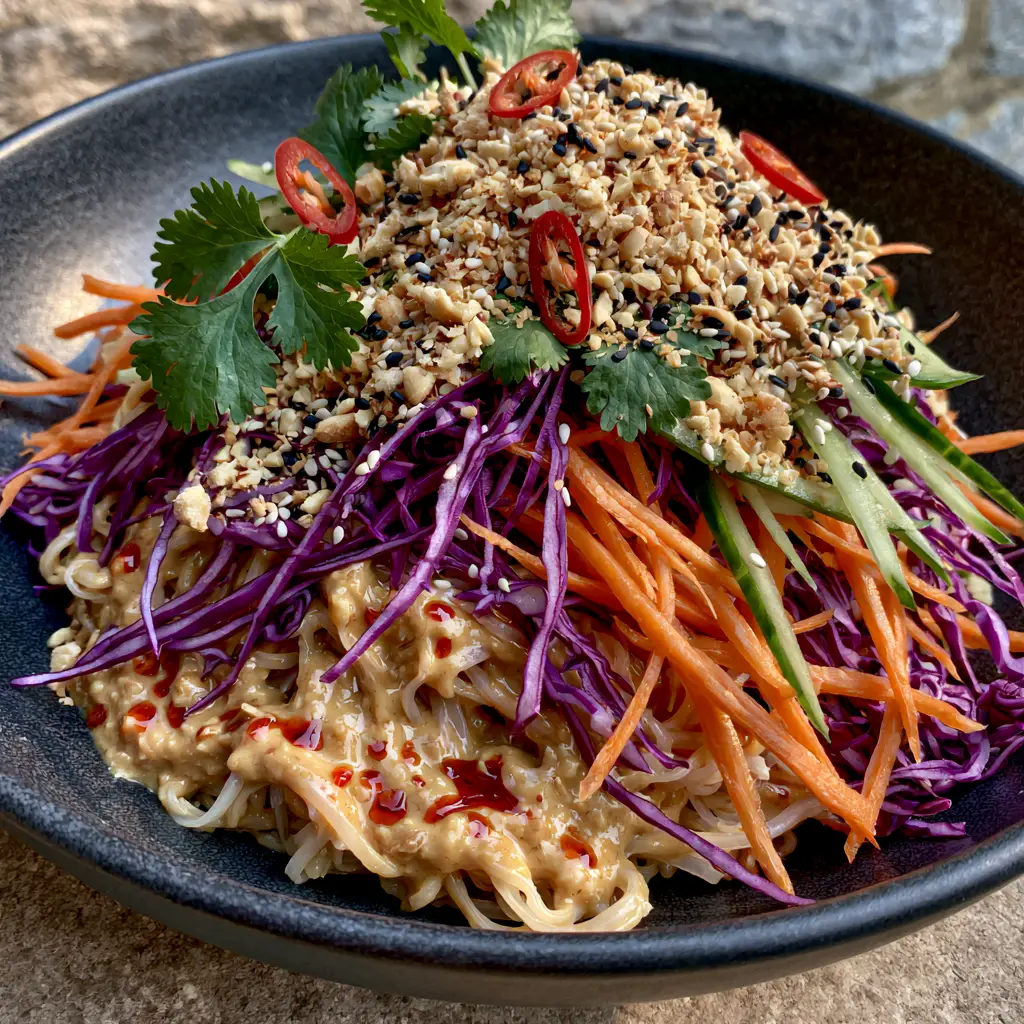
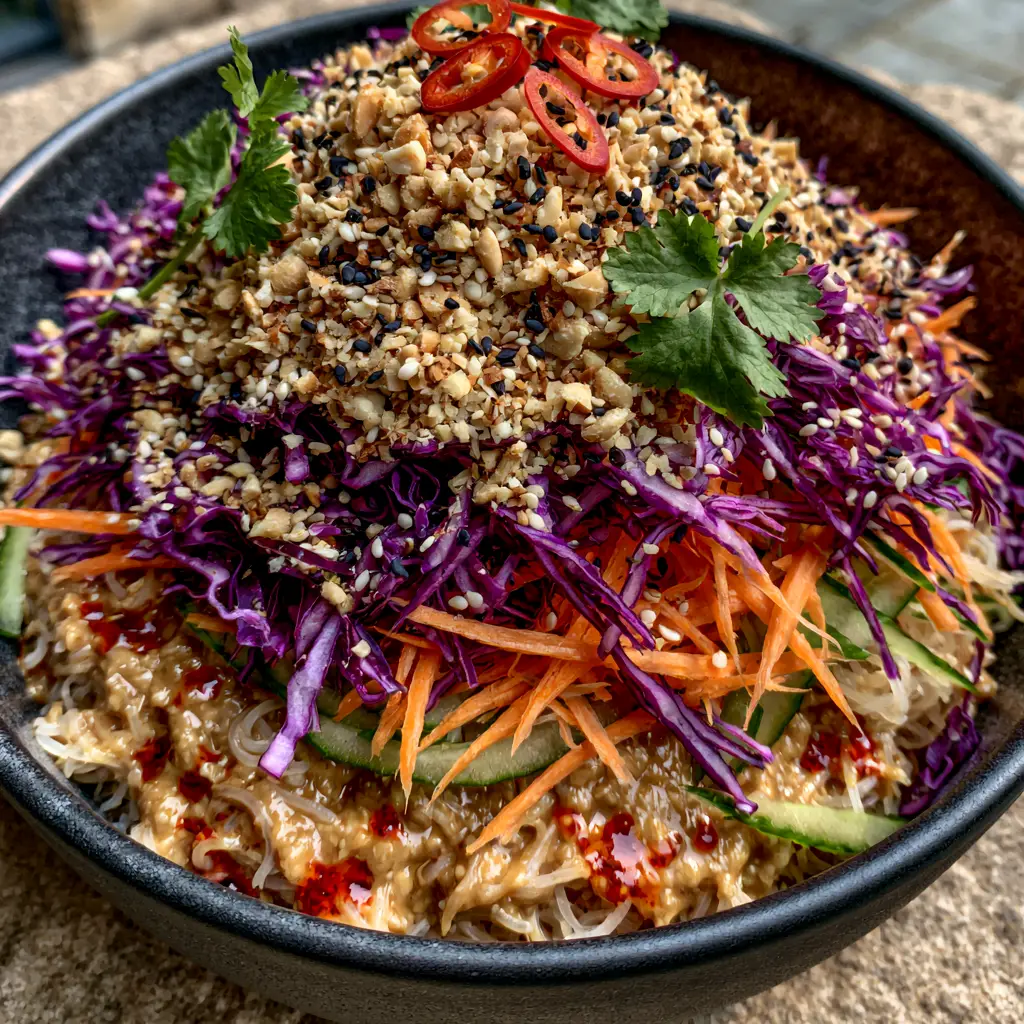
Imagine thin, perfectly tender rice noodles heavily coated in a thick, glossy sauce that clings to every strand. The visual appeal is undeniable, with deep red chili oil droplets creating a shimmering mosaic against a backdrop of vibrant purple cabbage and bright orange carrots.
This recipe is designed to be served in a modern shallow matte-black bowl, where the high-contrast textures of crushed peanuts and toasted sesame seeds pop against the dark ceramic. Whether you are prepping for a healthy lunch or a sophisticated dinner, this bowl delivers on every sensory promise.
Why This Cold Noodle Bowl Wins Every Time
- Textural Harmony: We combine soft rice noodles with the aggressive crunch of shredded purple cabbage and julienned carrots for a multi-dimensional mouthfeel.
- Balanced Heat: The infusion of red bird’s eye chilies and chili oil droplets provides a layered spice profile that warms the palate without overwhelming the fresh flavors.
- Glossy Aesthetic: Our ginger-peanut sauce is engineered for maximum “cling,” ensuring the noodles look as shimmering and delicious as they taste.
- Visual Contrast: The inclusion of both black and white toasted sesame seeds adds a professional, high-contrast finish to the final plating.
The Texture-Rich Components for Our Cold Noodle Bowl
To achieve the specific visual and flavor profile of this spicy Asian noodle salad, every ingredient serves a dual purpose: aesthetic brilliance and culinary depth.
Thin Rice Noodles: 8 oz (225g) of dry vermicelli-style rice noodles. These provide a delicate, neutral base that absorbs the ginger-peanut flavors while maintaining a light, airy structure.
Natural Creamy Peanut Butter: 1/2 cup (125g) of high-quality, drippy peanut butter. This is the foundation of our thick sauce, providing the fat necessary to carry the spice and salt across the tongue.
Red Chili Oil: 2 tbsp (30ml) for the sauce and extra for those signature droplets. The oil provides a glossy sheen and a lingering heat that is essential for the “shimmering” effect in the bowl.
Fresh Ginger & Garlic: 1 tbsp (6g) of freshly grated ginger and 2 cloves of minced garlic. These “invisible” aromatics provide the sharp, pungent backbone that cuts through the richness of the peanut butter.
Purple Cabbage: 2 cups (140g) finely shredded. Beyond its peppery crunch, the deep violet hue provides the primary color contrast against the orange carrots.
Bird’s Eye Chilies: 2-3 small red chilies, thinly sliced. These are purely for the bold, adventurous heat and the striking red rounds that garnish the top of the dish.
Foundational Seasonings: 3 tbsp (45ml) low-sodium soy sauce, 2 tbsp (30ml) rice vinegar, and 1 tbsp (15ml) honey or maple syrup. These balance the five essential tastes: salty, sour, and sweet.
Essential Equipment for Professional Plating
Achieving a photo-ready result requires the right tools to handle the delicate rice noodles and the high-contrast vegetable prep.
A sharp Mandoline Slicer or a professional Julienne Peeler is non-negotiable for getting those perfectly uniform carrot matchsticks and paper-thin cucumber slices. For the noodles, a large Stainless Steel Mixing Bowl allows you to toss the noodles vigorously without breaking them.
Finally, to replicate the midjourney visual, use a Shallow Matte-Black Ceramic Bowl. The dark, non-reflective surface makes the glossy noodles and red chili oil droplets “pop” under natural light.
The Science of Prepping Your Spicy Asian Noodle Salad
Perfecting the Rice Noodle Base
Start by bringing a large pot of water to a rolling boil. Rice noodles are delicate; overcooking leads to a mushy mess, while undercooking results in a plastic-like texture.
Submerge 8 oz (225g) of rice noodles into the boiling water, then immediately remove the pot from the heat. Let them soak for 3-5 minutes until they are “al dente”—tender but still possessing a slight bite.
Drain the noodles and rinse them under cold running water for at least 60 seconds. This stops the cooking process and removes excess starch, which is the secret to preventing the noodles from clumping together.
Emulsifying the Glossy Ginger-Peanut Sauce
In a medium bowl, whisk together the 1/2 cup (125g) peanut butter, 3 tbsp (45ml) soy sauce, 2 tbsp (30ml) rice vinegar, 1 tbsp (15ml) honey, 1 tbsp (6g) grated ginger, and minced garlic. The mixture will initially look broken or grainy.
Slowly whisk in 2-4 tbsp (30-60ml) of warm water, one tablespoon at a time. Watch as the sauce transforms into a thick, glossy emulsion that is pourable but heavy enough to coat a spoon.
This emulsification process is critical. If the sauce is too thin, it will pool at the bottom of the bowl; if it is too thick, it won’t shimmer under the light as described in our visual blueprint.
The Art of the High-Contrast Vegetable Slaw
While the noodles drain, prepare your vegetable “toppings.” Shred 2 cups (140g) of purple cabbage as thinly as possible to ensure it integrates well with the noodles.
Julienne the carrots into 2-inch matchsticks and slice the cucumber into thin half-moons. Keeping these shapes distinct is what creates the “layered texture” required for a professional presentation.
Combine the noodles and half of the peanut sauce in your mixing bowl. Use tongs to lift and fold the noodles until they are fully saturated and glowing.
Plating for Visual Impact
Place a generous mound of the coated noodles into your matte-black bowl. Arrange the cabbage, carrots, and cucumber in distinct clusters on top rather than mixing them in completely.
Drizzle the remaining sauce over the vegetables, then carefully add 1 tsp (5ml) of red chili oil in small, distinct droplets. These droplets should sit on top of the sauce, creating a beautiful “lava” effect.
Finish with a heavy dusting of crushed roasted peanuts, a mix of black and white sesame seeds, fresh cilantro sprigs, and the sliced red bird’s eye chilies. The result should look like a handheld smartphone photo: raw, vibrant, and incredibly appetizing.
Expert Tips for Success
- Soggy Noodle Prevention: Always rinse noodles in cold water. If you aren’t serving immediately, toss them in 1 tsp (5ml) of toasted sesame oil to keep them slippery.
- The “Gloss” Factor: If your sauce looks dull, add a teaspoon of honey. The sugars help catch the light and create that “shimmering” effect in the bowl.
- Heat Control: Bird’s eye chilies are potent. If you prefer a milder spicy Asian noodle salad, remove the seeds from the chilies before slicing.
- Salt Balance: Peanut butters vary in salt content. Always taste your sauce before adding it to the noodles; you may need an extra splash of soy sauce or a pinch of salt.
Storage, Reheating, and Meal Prep Advice
This salad is best enjoyed fresh, but it holds up remarkably well for meal prep. Store the dressed noodles and raw vegetables in separate airtight containers in the refrigerator for up to 3 days.
If the peanut sauce thickens too much in the fridge, simply add a teaspoon of warm water and stir to loosen it up. Do not freeze this dish; the cucumbers and cabbage will lose their essential “snap” once thawed.
Creative Pairings for a Full Asian-Inspired Feast
This noodle bowl is a complete meal on its own, but it also pairs beautifully with other vibrant dishes. For a protein boost, try serving it alongside a Thai shrimp noodle salad or add some grilled chicken to create a cold rice noodle salad with chicken.
If you are hosting a summer gathering, this dish fits perfectly into a spread of refreshing summer salad recipes. You can even contrast the spicy flavors with a refreshing cucumber onion tomato salad to cleanse the palate between bites.
For those who love the texture of noodles but want a different flavor profile, consider our crunchy Asian ramen salad as a crunchy alternative for your next potluck.
Frequently Asked Questions
Bird’s eye chilies are quite hot (50,000-100,000 Scoville units). For a milder version, remove the seeds or substitute with a milder red fresno chili.
Absolutely. Grilled shrimp, shredded chicken, or crispy tofu pieces are excellent additions that pair well with the ginger-peanut dressing.
Yes! Use tamari instead of soy sauce. Rice noodles are naturally gluten-free, making this a perfect option for sensitive diets.
Rinse the noodles under cold water immediately after cooking to remove excess starch. Tossing them in a teaspoon of toasted sesame oil also provides a non-stick coating.
The gloss comes from the emulsification of peanut butter with warm water and a touch of honey. Whisk vigorously until the sauce reflects light and clings to the noodles.
The Ultimate Spicy Asian Noodle Salad Recipe
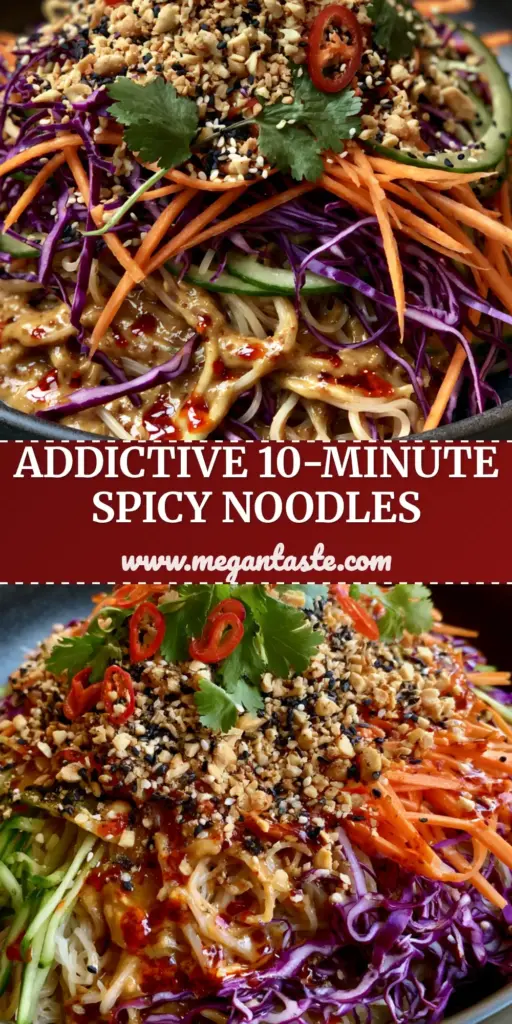
Spicy Asian Noodle Salad with Creamy Ginger Peanut Sauce
Ingredients
Equipment
Method
- Bring a pot of water to a boil, then remove from heat. Submerge rice noodles for 3-5 minutes until al dente.
- Drain and rinse noodles under cold water for 60 seconds to stop cooking and remove starch.
- Whisk peanut butter, soy sauce, vinegar, honey, ginger, garlic, and chili oil. Add warm water 1 tbsp at a time until glossy and thick.
- Toss noodles with half the sauce until fully shimmering and coated.
- Place noodles in a matte-black bowl. Arrange shredded cabbage, julienned carrots, and cucumber slices on top.
- Drizzle remaining sauce and add chili oil droplets. Finish with crushed peanuts, sesame seeds, cilantro, and bird's eye chilies.
Notes
If the sauce is too thick after refrigerating, thin it with a teaspoon of warm water.
Closing & Call to Action
There is nothing quite like the satisfaction of a perfectly balanced spicy Asian noodle salad. It is a dish that proves healthy eating can be both visually stunning and deeply indulgent. With its shimmering peanut sauce and high-contrast vegetable crunch, it’s bound to become a staple in your kitchen.
Did you try this recipe? We’d love to see your glossy noodle creations! Leave a comment below, and don’t forget to share your photos and follow us on Pinterest for more culinary inspiration.