This surimi salad is the quintessential Japanese-inspired side dish that you’ve likely fallen in love with at high-end sushi bistros. Known traditionally as Kani Salad, this recipe transforms humble imitation crab into a gourmet experience that is as visually stunning as it is delicious. By focusing on finely shredded textures and a glossy, rich dressing, we create a dish that balances creamy, crunchy, and salty notes perfectly.
Whether you are looking for a light lunch or a vibrant side for your next sushi night, this surimi salad delivers professional results with minimal effort. The secret lies in the quality of the Kewpie mayonnaise and the precision of the vegetable cuts, ensuring every bite is infused with flavor. If you enjoy a refreshing seafood salad, this recipe will quickly become a staple in your culinary rotation.
Why You Will Crave This Vibrant Kani-Style Surimi Salad
- Textural Masterclass: The contrast between the delicate strands of surimi and the snap of julienned cucumber is addictive.
- Authentic Flavor Profile: We use genuine Kewpie mayonnaise and togarashi to achieve that signature Japanese umami.
- Visually Stunning: The bright orange tobiko roe provides “pops” of color that look incredible on any dinner table.
- High-Speed Prep: You can have this restaurant-quality surimi salad ready in under 15 minutes.
- Versatile Pairing: It works beautifully alongside crunchy Asian vegetable salads or as a topping for bowls.
Essential Components for the Perfect Creamy Base
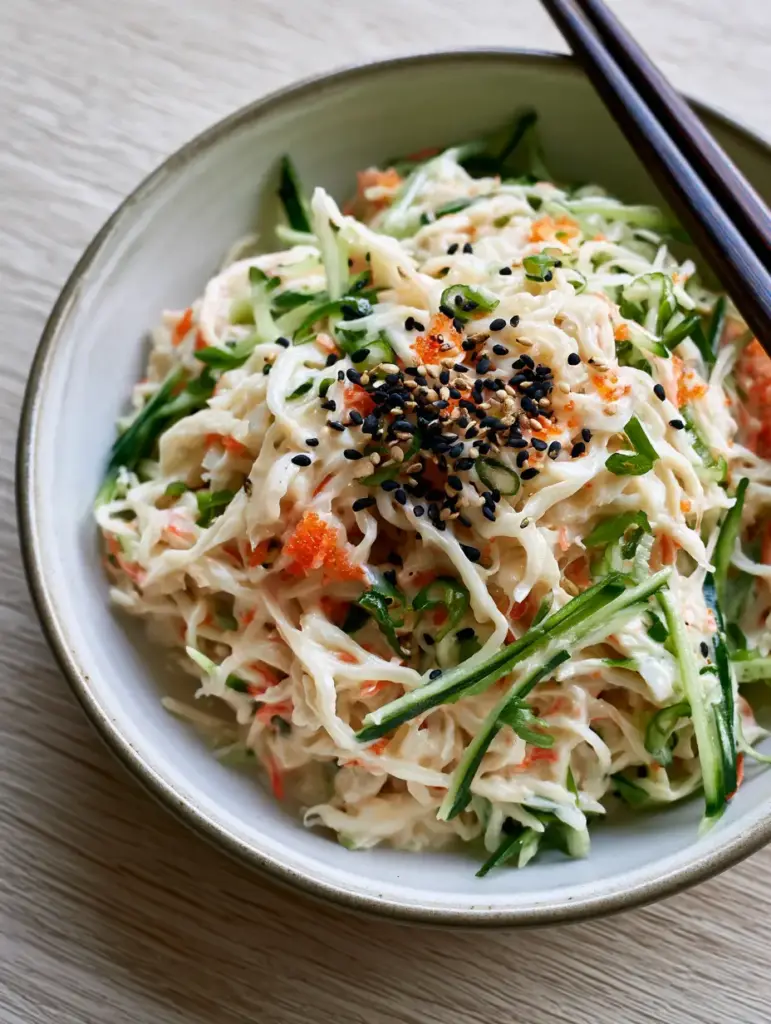
To achieve the high-gloss, pale cream finish seen in our visual blueprint, you must select the right ingredients. The surimi salad relies on the quality of its fats and the freshness of its produce.
Imitation Crab (Surimi): Look for “leg style” surimi rather than flakes. The leg style allows you to pull the meat into those thin, delicate strands that characterize an authentic surimi salad.
Kewpie Mayonnaise: This is non-negotiable. Unlike Western mayo, Kewpie uses only egg yolks and apple or rice vinegar, providing a glossy, thick, pale cream sauce that clings to the crab meat without becoming watery.
Seedless Cucumber: We recommend using English or Persian cucumbers. Because we are julienning them, the lack of large seeds prevents the surimi salad from becoming soggy over time.
Tobiko (Flying Fish Roe): These tiny bright orange roe add a salty, oceanic burst and a sophisticated crunch that elevates the dish from a simple slaw to a delicacy.
Togarashi & Aromatics: A pinch of red togarashi spice adds a subtle, multidimensional heat, while toasted black sesame seeds and thinly sliced green scallions provide the final aromatic flourish.
Mastering the Shred: Step-by-Step Instructions
Phase 1: Preparing the Surimi Strands
Start by taking 1 lb (450g) of imitation crab sticks. Using your fingers or two forks, finely shred the meat into long, thin threads. Do not chop them; you want the texture to be fibrous and delicate to maximize the surface area for the dressing.
If the surimi is cold, it will shred more easily. Once shredded, place the crab into a large Japanese ceramic bowl. The visual goal is a mountain of pulled, thin strands that look light and airy.
Phase 2: The Precision Julienne
Take one large English cucumber (approx 300g). Cut it into 3-inch (7.5cm) lengths. Slice these into very thin planks, then stack the planks and cut them into vibrant, thin julienned strips.
Avoid the watery center core of the cucumber. Focus on the firm outer flesh to ensure your surimi salad maintains its structural integrity. Toss these strips in with the shredded surimi.
Phase 3: Emulsifying the Glossy Dressing
In a small mixing bowl, whisk together 1/2 cup (120ml) of Kewpie mayo, 1 tsp (5ml) of rice vinegar, and a pinch of salt. Pour this over the crab and cucumber mixture.
Fold the ingredients gently using chopsticks. You are looking for a glossy, thick coating that covers every strand without pooling at the bottom of the bowl. The color should be a consistent, pale ivory.
Phase 4: The Finishing Flourish
Now, fold in 2 tbsp (30g) of bright orange tobiko roe. Save a small amount for the final garnish. The roe should be evenly distributed, looking like tiny jewels throughout the surimi salad.
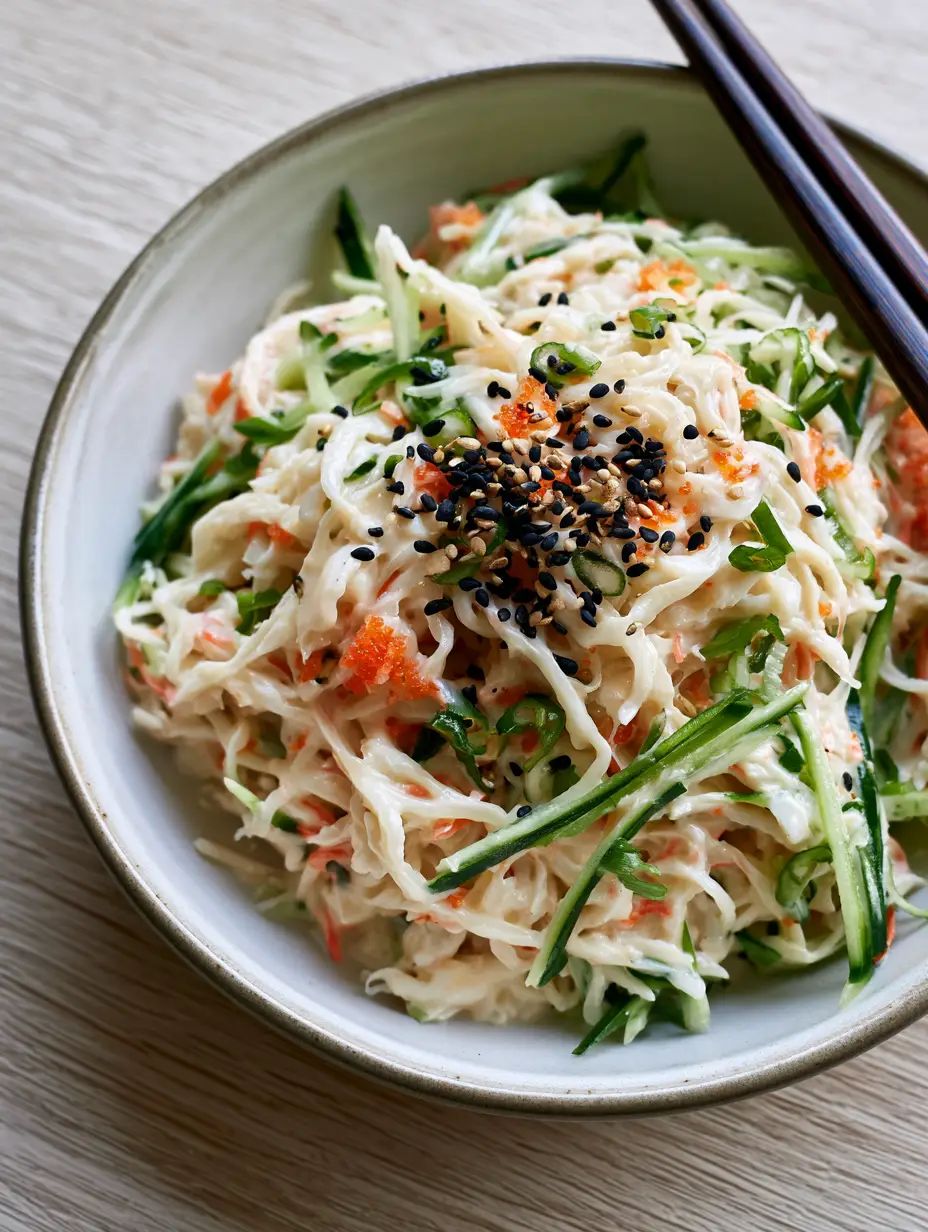
Transfer the mixture to your serving bowl. Sprinkle the toasted black sesame seeds and finely sliced green scallions over the top with a precise, steady hand. Finish with a light dusting of red togarashi spice for a hint of warmth.
Expert Tips for a Professional Surimi Salad
- Chill Your Bowl: For the most refreshing experience, chill your ceramic serving bowl in the fridge for 20 minutes before plating.
- Pat Dry the Cucumber: After julienning, pat the cucumber strips with a paper towel. This prevents excess moisture from thinning out your glossy pale cream sauce.
- Use Quality Chopsticks: Mixing with sleek dark wood chopsticks (as seen in our photography) prevents the delicate surimi strands from breaking or mashing.
- The 30-Minute Rule: While you can eat this immediately, letting the surimi salad sit in the fridge for 30 minutes allows the flavors to meld beautifully.
Storage and Make-Ahead Advice
The surimi salad is best enjoyed the day it is made. However, you can store leftovers in an airtight container in the refrigerator for up to 2 days. Note that the cucumber may release some water over time; simply give it a quick stir before serving to re-emulsify the dressing.
We do not recommend freezing this dish. The mayonnaise base and the high water content of the cucumber will separate and lose their signature texture upon thawing. If you are prepping for a party, you can shred the surimi and julienne the cucumber a day in advance, storing them separately from the dressing.
What to Serve With This Surimi Salad
This dish is exceptionally versatile. It serves as a fantastic appetizer for a spiced coconut seafood main or as a creamy side to classic teriyaki chicken.
For a complete Japanese-themed meal, consider serving it alongside a bowl of miso soup and some steamed edamame. The richness of the surimi salad also balances perfectly with the charred notes of teriyaki chicken kabobs.
Frequently Asked Questions
While you can, Kewpie is highly recommended for its richer, tangier flavor and yolk-only base, which provides the salad’s signature glossy texture.
Using cold ‘leg-style’ sticks and hand-pulling them along the natural grain of the fish protein results in the most delicate, thin strands.
Most imitation crab contains wheat starch as a binder. For a gluten-free version, look for specially labeled gluten-free surimi brands.
Surimi is imitation crab made from processed white fish (usually pollock) that has been flavored and shaped to resemble shellfish.
Tobiko is flying fish roe and is slightly larger and crunchier than masago (capelin roe), making it the preferred choice for this premium salad.
The Ultimate surimi salad Recipe
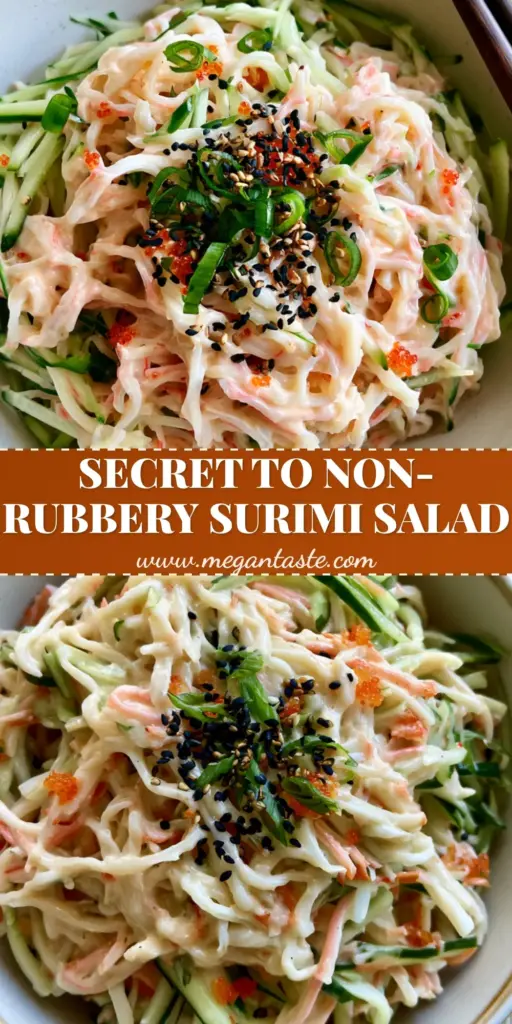
surimi salad: The Ultimate Creamy Japanese Kani Salad Recipe
Ingredients
Equipment
Method
- Hand-pull the imitation crab sticks into fine, delicate strands. Place them in a chilled ceramic bowl.
- Cut the seedless cucumber into thin 3-inch strips, avoiding the watery core. Add to the bowl with the surimi.
- Whisk Kewpie mayo and rice vinegar until smooth and glossy. Fold into the crab mixture until evenly coated.
- Fold in half the tobiko. Top the salad with remaining roe, toasted black sesame seeds, sliced scallions, and a pinch of togarashi.
Notes
Pat the cucumber strips dry with a paper towel to prevent the salad from becoming watery.
Join the Megan Taste Community!
If you loved this surimi salad, please take a moment to save it to your favorite Pinterest board! You can find me at megan_taste for more daily recipe inspiration. Did you make this dish? I’d love to see your results! Post a photo in the comments below and don’t forget to leave a 5-star rating to help other home cooks find this recipe. Your support helps us keep the kitchen fires burning!