This Roasted Beet Salad is a vibrant, restaurant-quality dish that brings sophisticated flavors to your home table. Whether you are looking for a nutrient-dense lunch or a stunning side dish, this recipe delivers deep caramelization and a perfect balance of textures. Unlike a basic classic beetroot salad, this version focuses on high-heat roasting to achieve those elusive crispy, charred edges that pair so beautifully with creamy goat cheese.
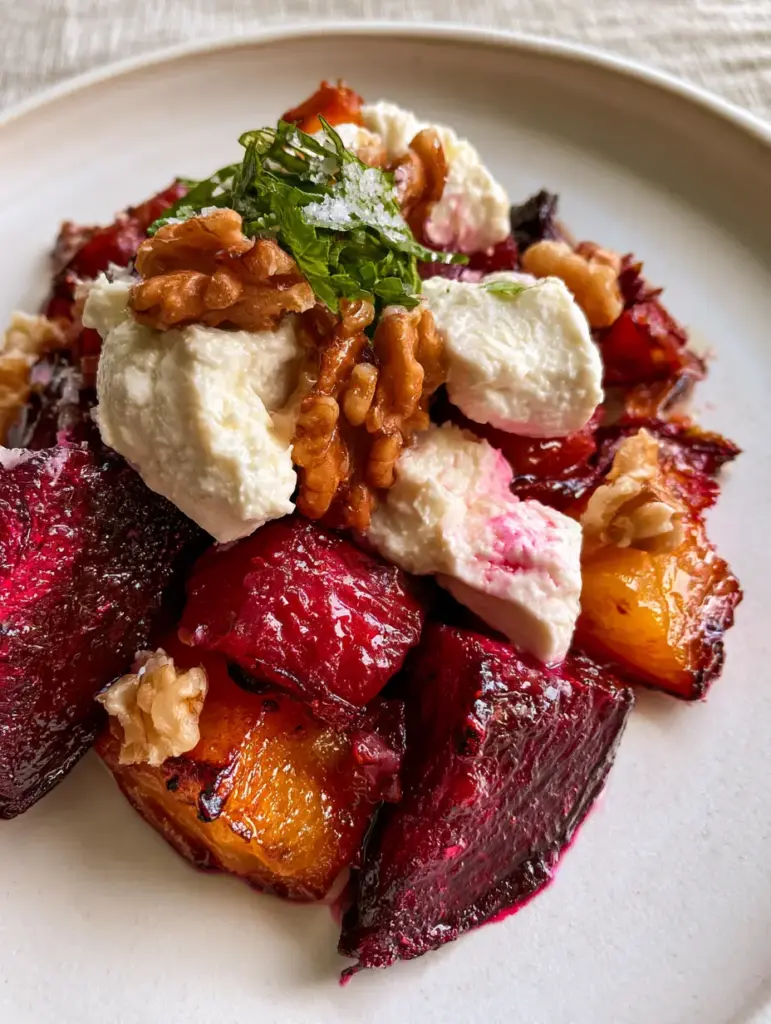
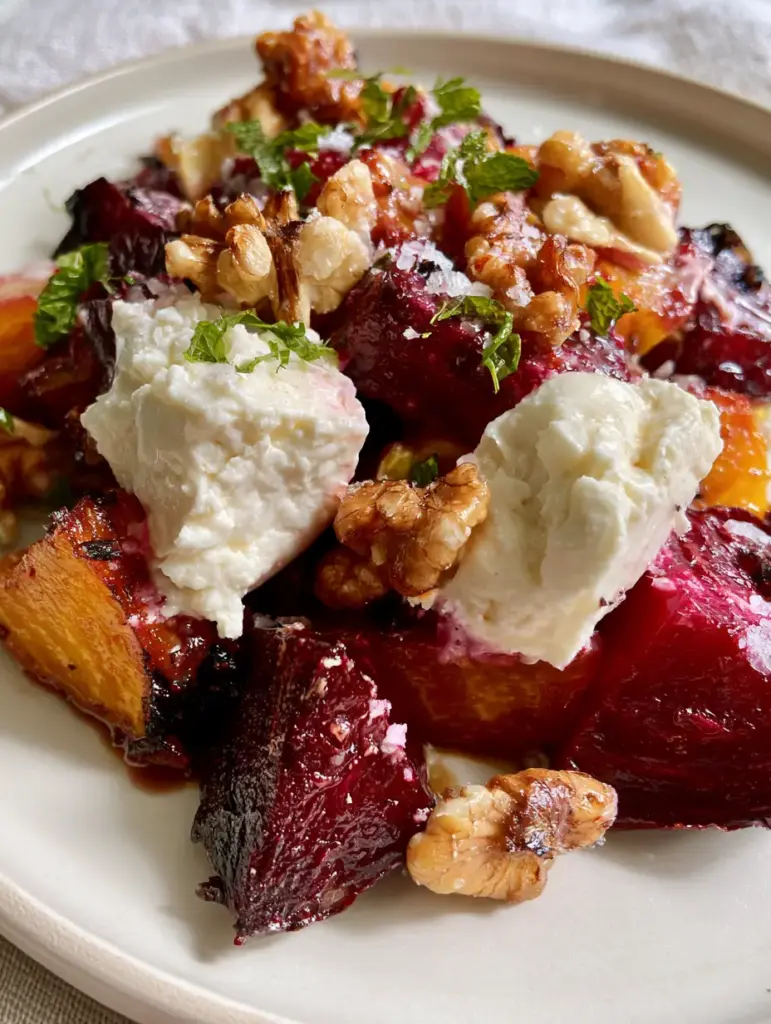
When you first pull these beets out of the oven, the aroma of earthy sweetness combined with the sharp tang of balsamic glaze is absolutely intoxicating. The visual appeal of ruby red and golden beets against a minimalist ceramic plate makes this Roasted Beet Salad a Pinterest favorite. If you’ve enjoyed my roasted sweet potato salad, you will fall in love with the depth of flavor roasting brings to these root vegetables.
Why This Is The Ultimate Roasted Beet Salad
- Textural Harmony: Large, thick chunks of beets provide a meaty bite, while toasted walnut halves offer a satisfying crunch.
- Creamy Contrast: Rustic crumbles of matte-white goat cheese melt slightly against the warm beets for a luxurious mouthfeel.
- Visual Masterpiece: The vibrant contrast of deep red and gold beets garnished with a fresh mint chiffonade is a feast for the eyes.
- Flavor Balance: The natural sugars of the beets are enhanced by a honey-balsamic glaze, finished with a dusting of flaky sea salt.
Creating a recipe that ranks and tastes delicious requires attention to detail. Just like a well-constructed roasted chickpea bowl, every element here serves a purpose. We aren’t just making a salad; we are building a flavor profile that hits sweet, salty, earthy, and bright notes in every single forkful.
Essential Ingredients for Success
Fresh Ruby Red and Golden Beets: We use a mix of both for visual diversity and a complex, earthy sweetness. The thick chunks are essential for achieving that deep caramelization without the center becoming mushy.
Goat Cheese (Chèvre): Choose a high-quality, creamy goat cheese. The matte-white crumbles provide the necessary acidity to cut through the richness of the roasted vegetables.
Walnut Halves: These must be toasted to release their natural oils. They provide a woody, bitter-sweet note that complements the honey-balsamic glaze perfectly.
Honey-Balsamic Glaze: A reduction of balsamic vinegar and honey creates a glossy finish that makes the beets glisten under soft morning light. If you prefer a lighter profile, you might enjoy the citrus notes in my asian vegetable salad.
Fresh Mint: A fine chiffonade of mint adds a cooling, aromatic finish that lifts the entire dish. Do not skip the flaky sea salt and cracked black pepper for that final professional touch.
Step-By-Step: Achieving Perfect Caramelization
Preparing the Root Vegetables
Begin by preheating your oven to 400°F (200°C). Scrub 1.5 lbs (680g) of beets thoroughly. You do not need to peel them if the skins are thin, but for the most elegant Roasted Beet Salad, peeling is recommended.
Cut the beets into large, thick chunks (about 1-inch pieces). This size ensures that the outside has enough time to develop charred, crispy edges while the inside remains tender and succulent.
The Roasting Process
Toss the beet chunks with 2 tbsp (30ml) of extra virgin olive oil, a pinch of salt, and pepper. Spread them in a single layer on a parchment-lined baking sheet. Crowding the pan will cause them to steam rather than roast, and we want deep caramelization.
Roast for 35-45 minutes, tossing halfway through. You are looking for a vibrant, glistening texture and dark, caramelized spots on the edges. The smell of the natural sugars browning is a key sensory cue that your Roasted Beet Salad is almost ready.
Toasting and Glazing
While the beets roast, place 1/2 cup (60g) of walnut halves in a dry skillet over medium heat. Toast for 3-5 minutes until they are golden-brown and fragrant. Set aside.
In a small saucepan, whisk 1/4 cup (60ml) balsamic vinegar and 1 tbsp (15ml) honey. Simmer until reduced by half into a thick, syrupy honey-balsamic glaze.
The Final Assembly
Transfer the warm, caramelized roasted beet chunks to a minimalist, off-white artisanal ceramic plate. Layer on the large, rustic crumbles of creamy goat cheese and the toasted walnuts.
Drizzle the glossy glaze over the top. Garnish with the fresh mint chiffonade and a generous dusting of flaky sea salt. The heat from the beets will soften the cheese just enough to make it spreadable.
Expert Tips for the Best Roasted Beet Salad
- Use a High Temperature: Roasting at 400°F (200°C) is non-negotiable for those crispy edges. Lower temperatures will result in a boiled texture.
- Don’t Peel Post-Roast: While some recipes suggest roasting whole and peeling later, cutting and peeling before roasting allows the maximum surface area for caramelization.
- Quality of Salt: Use flaky sea salt (like Maldon) for the finishing touch. The large crystals provide a crunch and a burst of saltiness that fine table salt cannot replicate.
- Prep the Mint Last: Mint oxidizes quickly. Slice it into a fine chiffonade just seconds before serving to ensure a vibrant green color.
Storage, Reheating, and Make-Ahead Instructions
Refrigerator: Store the roasted beets (without the cheese and walnuts) in an airtight container for up to 5 days. This makes this Roasted Beet Salad an excellent option for meal prep, similar to my southwestern chicken salad.
Reheating: To maintain the caramelized chunks, reheat the beets in a 350°F (175°C) oven for 10 minutes. Avoid the microwave, as it will make the beets soft and lose the crispy edges.
Freezing: We do not recommend freezing this salad, as the texture of the beets and the creamy goat cheese will degrade significantly upon thawing.
What to Serve With This Roasted Beet Salad
This salad is versatile enough to be a standalone vegetarian main or a sophisticated side. Pair it with a high-protein dish like teriyaki chicken or gluten-free teriyaki chicken for a balanced meal. The sweetness of the beets also complements the smoky flavors of jerk chicken.
Frequently Asked Questions
Yes! Simply swap the goat cheese for a vegan feta or cashew-based creamy cheese, and use maple syrup in place of honey for the balsamic glaze.
You can, but a homemade reduction with honey provides a much better flavor balance and a superior glossy sheen that perfectly highlights the roasted beets.
For this specific recipe, peeling before roasting is recommended. It allows the honey-balsamic glaze to penetrate the vegetable and ensures the edges get that signature crispy caramelization.
Stack several fresh mint leaves, roll them tightly like a cigar, and use a sharp knife to slice them into very thin ribbons.
This usually happens if the oven temperature is too low or the pan is overcrowded. Ensure your oven is at 400°F (200°C) and the beet chunks are in a single layer with space between them.
The Ultimate Roasted Beet Salad Recipe
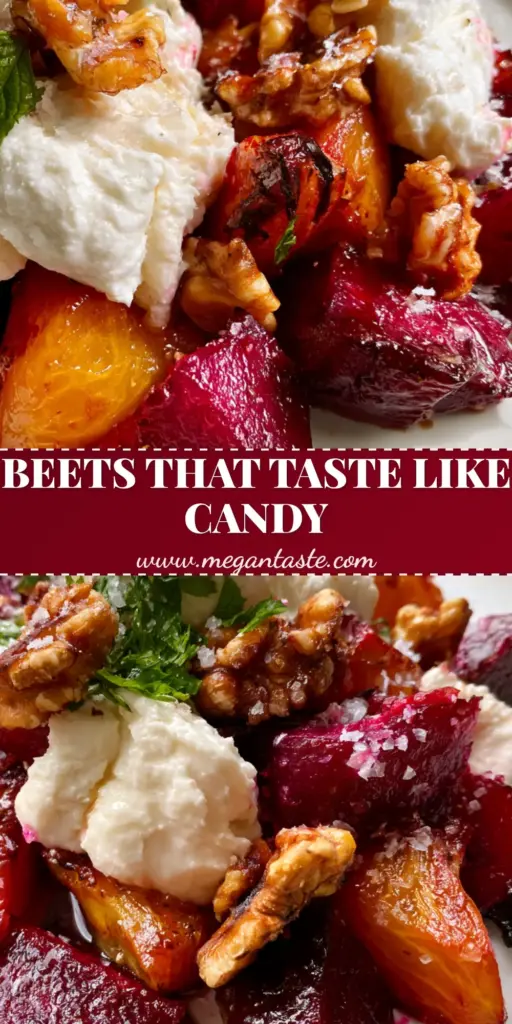
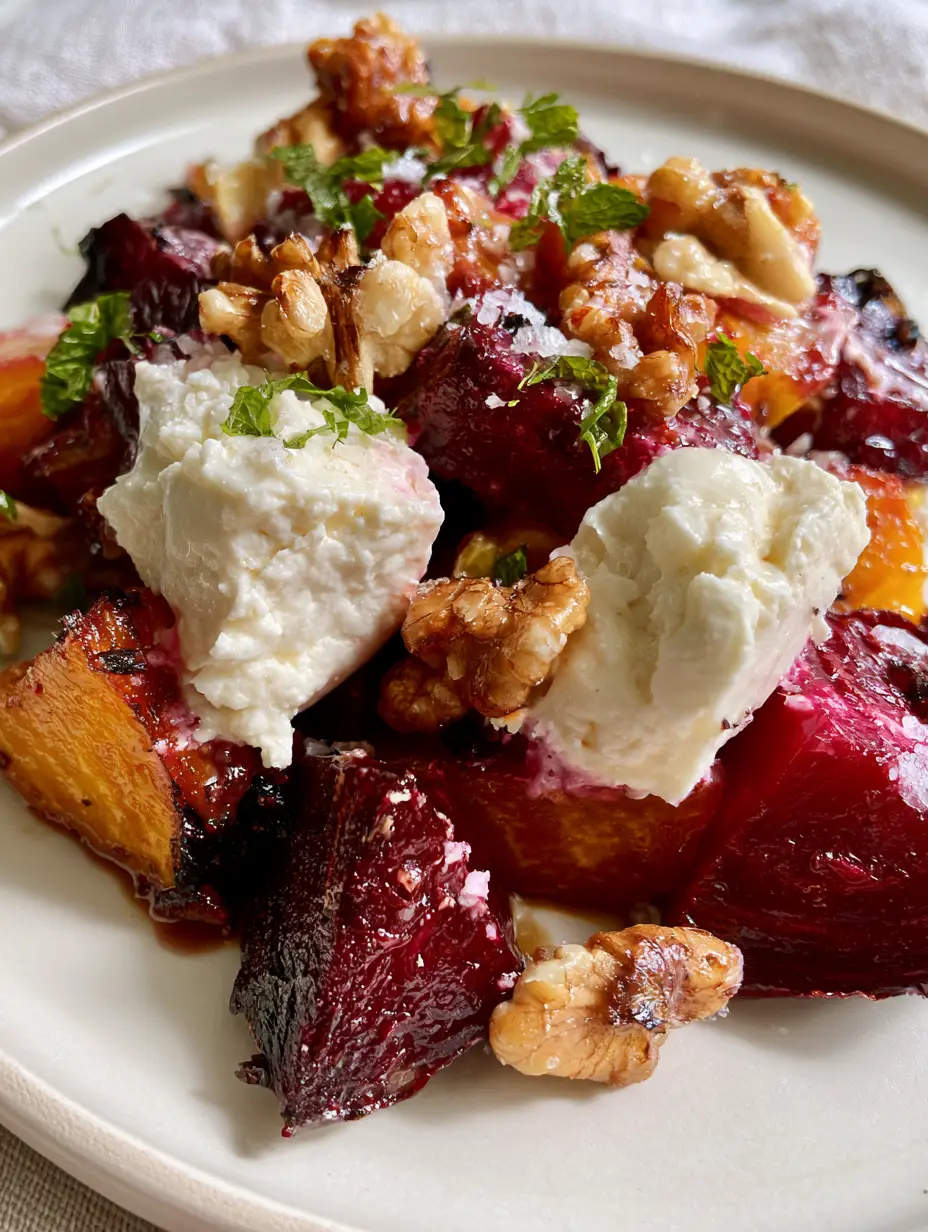
Roasted Beet Salad with Goat Cheese and Balsamic Glaze
Ingredients
Equipment
Method
- Preheat oven to 400°F (200°C). Peel and cut beets into 1-inch thick chunks. Toss with olive oil, salt, and pepper on a baking sheet.
- Roast for 35-45 minutes, tossing halfway through, until beets are tender and have charred, crispy edges.
- In a dry skillet, toast walnut halves over medium heat until golden-brown and fragrant (3-5 minutes).
- In a small saucepan, simmer balsamic vinegar and honey until reduced by half and glossy.
- Arrange warm beets on a plate. Top with goat cheese crumbles, toasted walnuts, mint chiffonade, and a drizzle of glaze. Finish with flaky sea salt.
Notes
Ensure the oven is fully preheated to achieve the caramelized charred edges.
Save This Recipe for Later!
If you love this Roasted Beet Salad, make sure to save it to your “Healthy Recipes” or “Vegetarian Sides” board on Pinterest! Be sure to follow megan_taste for more high-flavor, visual recipes. If you make this dish, please snap a photo and share it in the comments below—I love seeing your caramelized roasted beet chunks! Don’t forget to leave a 5-star rating if you enjoyed the recipe.