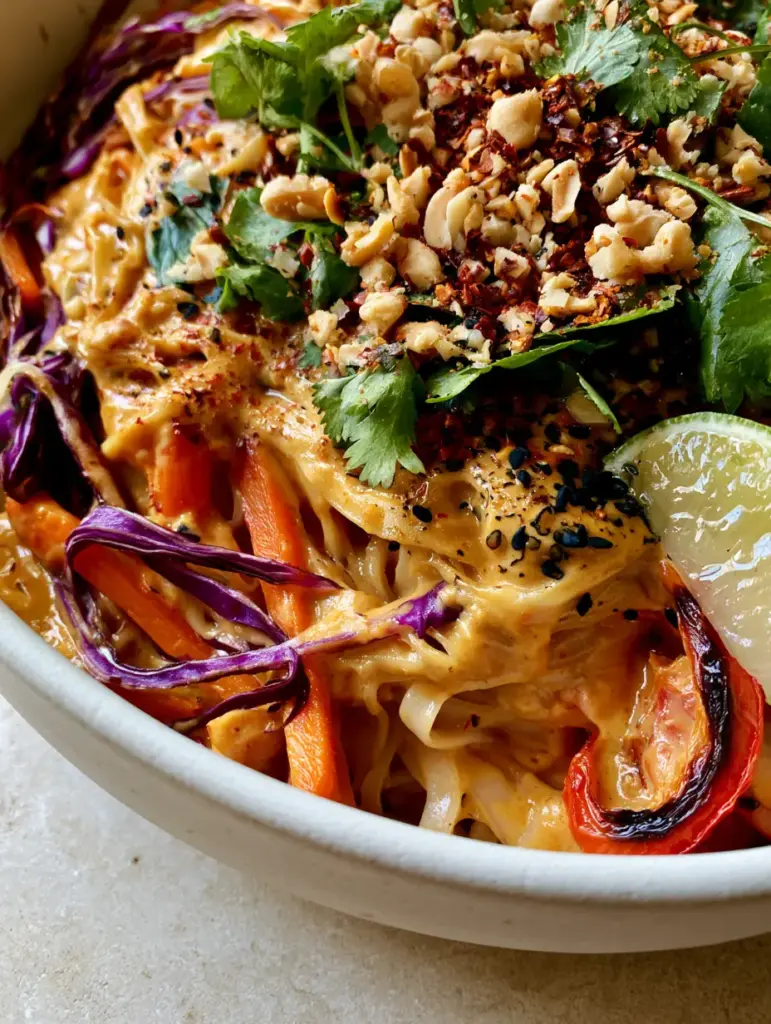
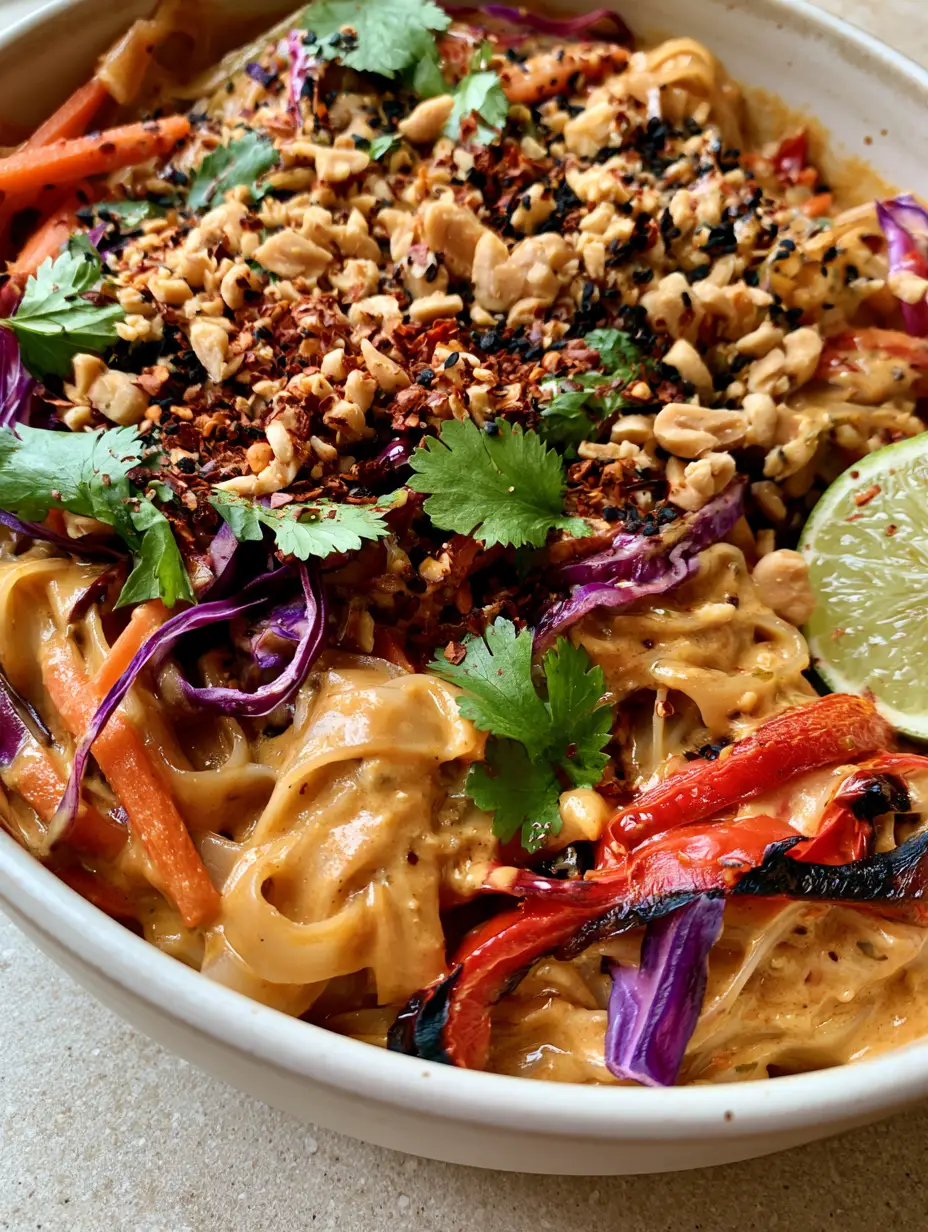
Thai noodle casserole is the ultimate fusion comfort food, blending the vibrant, aromatic flavors of Southeast Asian street food with the cozy, heart-warming structure of a classic oven-baked meal. Imagine tender, wide rice noodles glistening under a blanket of thick, creamy peanut satay sauce, punctuated by the crunch of fresh vegetables and the smoky aroma of charred red bell peppers.
This dish is designed for those who crave the complex balance of sweet, salty, and spicy flavors but want the convenience of a “set it and forget it” family dinner. Whether you are a fan of traditional Thai flavors or just looking for a way to upgrade your weeknight routine, this thai noodle casserole delivers a restaurant-quality experience right from your ceramic baking dish.
Why You Will Crave This Baked Thai Peanut Noodle Dish
- The Texture Contrast: You get soft, silky noodles paired with crunchy crushed roasted peanuts and crisp julienned carrots.
- Aromatic Umami: The sauce is a rich golden-tan masterpiece featuring coconut milk, red curry paste, and creamy peanut butter.
- Visual Vibrancy: The deep purple of the shredded cabbage and the bright green of fresh cilantro sprigs make this a showstopper on the table.
- Perfectly Charred Accents: Oven-roasting the red bell pepper strips provides a smoky depth that balances the sweetness of the satay sauce.
If you enjoy comforting baked dishes but want something with a bit more zing than a low-carb chicken casserole, this vibrant noodle bake is the answer. It brings a global flair to your kitchen while remaining incredibly accessible for the home cook.
The Essential Pantry List for Your Thai Noodle Casserole
To achieve that authentic, unedited kitchen aesthetic and professional flavor profile, every ingredient in this thai noodle casserole serves a specific culinary purpose. We aren’t just boiling noodles; we are building layers of flavor.
Wide Rice Noodles: 12 oz (340g). These are the backbone of the dish. They absorb the sauce without becoming mushy, unlike wheat-based pastas.
Creamy Peanut Butter: 3/4 cup (190g). Use a high-quality smooth variety to ensure the satay sauce remains velvety and rich.
Full-Fat Coconut Milk: 1 can (400ml). This provides the essential fat content for a luxurious mouthfeel and carries the aromatics of the curry paste.
Red Curry Paste: 2 tbsp (30g). This adds a gentle heat and a complex base of lemongrass, galangal, and shrimp paste (or vegan alternative).
Soy Sauce or Tamari: 3 tbsp (45ml). This provides the salty, umami backbone. Use Tamari to keep the dish gluten-free.
Honey or Agave: 2 tbsp (30ml). A touch of sweetness is required to balance the salt and spice, characteristic of Thai cuisine.
Fresh Aromatics: 1 tbsp (6g) freshly grated ginger and 3 cloves of minced garlic. These should be sautéed until fragrant to release their essential oils.
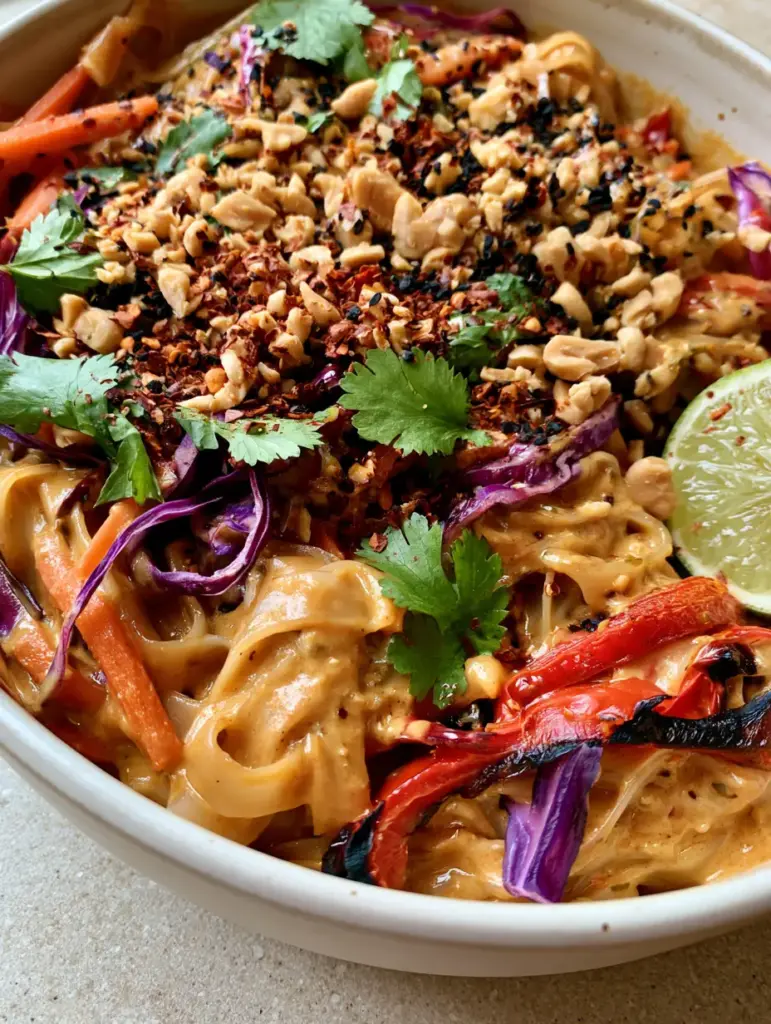
The Vegetable Medley: 2 large carrots, julienned; 2 cups (140g) shredded purple cabbage; and 2 red bell peppers, sliced into thin strips. These provide the wilted purple cabbage ribbons and charred red bell pepper strips seen in the visual blueprint.
Garnish Kit: 1/2 cup (60g) crushed roasted peanuts, 1/4 cup (10g) fresh cilantro leaves, 1 tsp (2g) red chili flakes, and 1 tbsp (9g) toasted black sesame seeds. Don’t forget the fresh lime wedges for that hit of acidity!
Step-by-Step to Noodle Perfection
1. Preparing the Wide Rice Noodles
Bring a large pot of water to a boil. Submerge your 12 oz (340g) of wide rice noodles. Crucial Tip: Cook them for 2 minutes less than the package instructions. They will finish cooking in the oven as they soak up the peanut satay sauce.
Drain the noodles and immediately rinse with cold water to stop the cooking process. Toss with a teaspoon of toasted sesame oil to prevent sticking while you prepare the sauce.
2. Crafting the Creamy Peanut Satay Sauce
In a medium saucepan over medium heat, whisk together the 3/4 cup (190g) peanut butter, 400ml coconut milk, 2 tbsp (30g) red curry paste, 3 tbsp (45ml) soy sauce, and 2 tbsp (30ml) honey. Add the ginger and garlic.
Whisk constantly until the sauce is thick, creamy, and a rich golden-tan color. It should easily coat the back of a spoon. If it feels too thick, add a splash of water or vegetable broth.
3. Searing and Charring the Vegetables
In a heavy skillet over high heat, toss the red bell pepper strips with a drizzle of oil. Let them sit undisturbed for 2-3 minutes until you see slight charred edges forming. Remove from heat.
In your modern matte-white ceramic baking dish, layer the par-cooked noodles, the charred peppers, julienned carrots, and the shredded purple cabbage ribbons. Pour the warm satay sauce over the top, using tongs to ensure every noodle is fully coated and glistening.
4. The Final Bake
Cover the dish with foil to trap the moisture. Bake at 375°F (190°C) for 15-20 minutes. This allows the flavors to meld and the vegetables to soften into the noodles. The purple cabbage should be tender-crisp, and the noodles should be perfectly al dente.
Expert Tips for Success
- Don’t Overcook the Noodles: Rice noodles are delicate. Over-boiling them before baking will result in a mushy casserole. Aim for a “firm” bite before they go into the oven.
- Layer for Visual Impact: When assembling, keep some of the red bell pepper strips and purple cabbage near the surface so they are visible through the sauce.
- Toast Your Seeds: Always use toasted black sesame seeds. The toasting process unlocks a nutty aroma that raw seeds lack.
- Acidity is Key: The lime wedge is not just a garnish. The “glistening juice droplets” provide the necessary acid to cut through the richness of the peanut butter and coconut milk.
If you’re looking for more global inspiration, you might enjoy exploring some traditional Ghana recipes or perhaps a classic chilled macaroni salad for your next gathering.
Storage, Reheating & Freezing
In the Fridge: Store leftovers in an airtight container for up to 3 days. The noodles will continue to absorb the sauce, so you may need to add a tablespoon of water or coconut milk before reheating.
Reheating: For best results, reheat in a skillet over medium-low heat or in the microwave covered with a damp paper towel to maintain the moisture of the thai noodle casserole.
Freezing: We do not recommend freezing this dish as the rice noodles can lose their structural integrity and become grainy upon thawing.
What to Serve With This Noodle Bake
While this thai noodle casserole is a complete meal on its own, it pairs beautifully with a light cucumber salad or crispy spring rolls. If you want to lean into the “casserole night” theme, you could even serve it alongside a breakfast casserole for a unique brunch-for-dinner spread.
Frequently Asked Questions
Absolutely. You can add cooked shredded chicken or sautéed shrimp to the mix before baking. If using raw shrimp, place them on top during the last 8-10 minutes of baking.
Yes! Since the base is rice noodles, you only need to ensure you use Tamari instead of soy sauce and a gluten-free certified red curry paste.
The secret is to undercook the noodles by 2 minutes during the initial boil. They will finish cooking in the oven by absorbing the satay sauce, keeping them al dente.
Most commercial red curry pastes have a moderate heat level. You can control the spice by starting with 1 tablespoon and adding more to the sauce as needed.
The Ultimate Thai Noodle Casserole Recipe
Thai Noodle Casserole with Creamy Peanut Satay Sauce
Ingredients
Equipment
Method
- Par-boil wide rice noodles for 2 minutes less than package directions. Rinse with cold water and toss with sesame oil.
- Whisk coconut milk, peanut butter, curry paste, soy sauce, honey, ginger, and garlic in a pan over medium heat until smooth and creamy.
- Sear red bell pepper strips in a hot skillet until edges are slightly charred.
- Layer noodles, carrots, cabbage, and charred peppers in a baking dish. Pour over the satay sauce and toss to coat.
- Cover with foil and bake at 375°F (190°C) for 15-20 minutes.
- Top with crushed peanuts, cilantro, black sesame seeds, chili flakes, and a squeeze of fresh lime juice.
Notes
Use full-fat coconut milk for the creamiest results.
Save This Recipe for Later!
Did this thai noodle casserole make your mouth water? Make sure to save this recipe to your Pinterest boards so you can find it whenever the craving for peanut satay hits! Follow megan_taste for more vibrant, family-friendly dinner inspiration.
If you made this, we want to see! Share a photo of your glistening noodles in the comments below and don’t forget to leave a 5-star rating if you loved it!