Sautéed asparagus with garlic and butter is the quintessential side dish that proves simple ingredients, when treated with professional techniques, yield extraordinary results. Imagine vibrant green stalks with perfectly charred, crispy tips resting in a shimmering pool of melted golden garlic butter. This recipe isn’t just about cooking a vegetable; it’s about mastering the balance of heat, fat, and acidity to create a restaurant-quality experience in your own kitchen.
Whether you are pairing this with a succulent steak or a light teriyaki chicken, the crunch of the tender-crisp asparagus combined with toasted minced garlic and a hint of citrus zest makes every bite unforgettable. If you’ve ever struggled with soggy, grey asparagus, this method will be a total game-changer for your weeknight rotation.
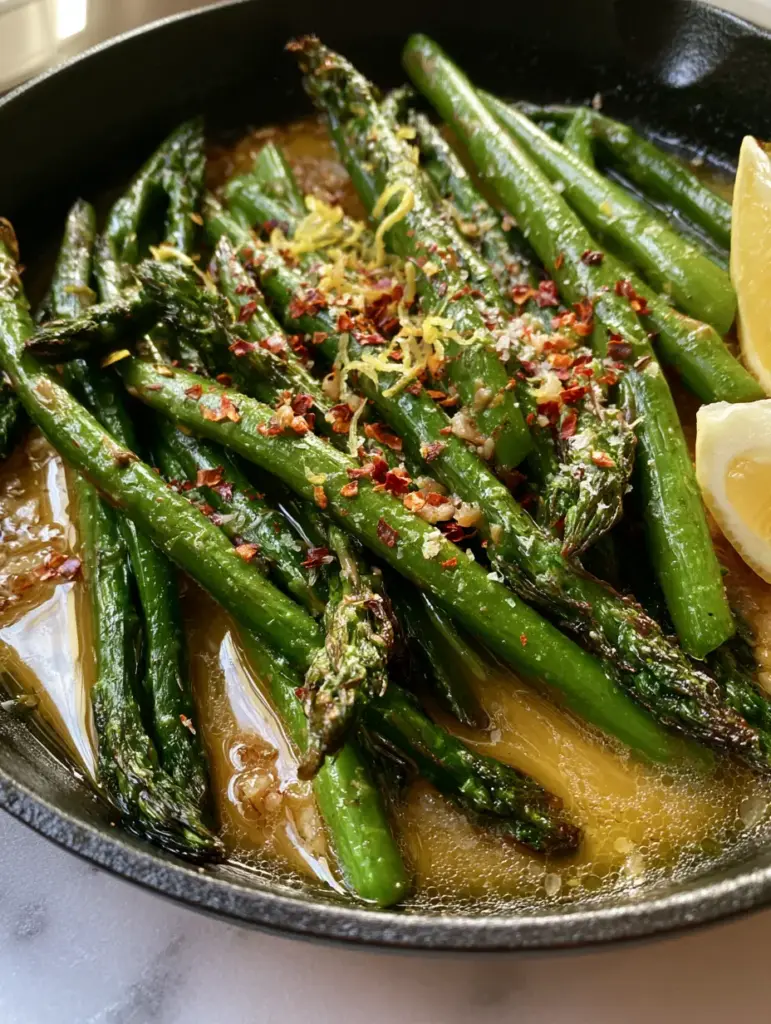
Why This Sautéed Asparagus with Garlic and Butter Works
- Visual Brilliance: The high-heat sear ensures a vibrant green color that looks stunning on any plate.
- Textural Contrast: You get the snap of the stalk paired with the delicate crunch of charred tips.
- Aromatic Depth: Using toasted minced garlic instead of raw garlic adds a nutty, mellow sweetness that infuses the golden butter sauce.
- The Acid Pop: Fresh lemon zest and wedges cut through the richness of the butter, brightening the entire flavor profile.
- Skillet Magic: Cooking in a matte black cast iron skillet provides superior heat retention for that perfect restaurant-style sear.
This recipe is a perfect companion to other hearty sides like garlic potatoes and green beans, helping you build a cohesive, gourmet meal without spending hours at the stove.
Essential Ingredients for the Best Garlic Butter Asparagus
Every ingredient in this sautéed asparagus with garlic and butter serves a specific culinary purpose. We aren’t just tossing things in a pan; we are building layers of flavor.
- Fresh Asparagus (1 lb / 450g): Choose medium-thickness stalks. Too thin and they turn to mush; too thick and they can be woody. Look for tight, firm tips.
- Unsalted Butter (3 tbsp / 42g): Using unsalted butter allows you to control the seasoning perfectly. It forms the base of our golden butter sauce.
- Fresh Garlic (4 cloves): We want a heavy hand here. Minced finely, these bits will toast into golden nuggets of flavor.
- Red Pepper Flakes (1/2 tsp / 1g): Adds a very subtle heat that wakes up the palate without overpowering the delicate asparagus.
- Fresh Lemon (1 unit): We use both the zest for aroma and the wedges for a hit of juice right before serving.
- Flaky Sea Salt: This provides a final “crunch” and pops the flavor of the butter.
- Freshly Ground Black Pepper: A foundational seasoning that adds earthy warmth.
- Neutral Oil (1 tbsp / 15ml): We use a high-smoke point oil (like avocado or grapeseed) to sear the asparagus before adding the butter to prevent burning.
The Secret to Prepping Asparagus Like a Chef
Before we hit the pan, we must address the “woody” end. Many people use the “snap method,” but this often wastes perfectly good vegetable. Instead, look at where the green begins to fade to white or purple. Use a sharp chef’s knife to trim about 1-2 inches (2.5-5cm) off the bottom.
Pro Tip: If your stalks are exceptionally thick, use a vegetable peeler to shave the bottom two inches of the skin. This reveals the tender heart and ensures the entire stalk cooks at the same rate as the tips.
Dry your asparagus thoroughly after washing. Water is the enemy of the sear. If the stalks are wet, they will steam rather than sauté, and you will lose those charred, crispy tips we are aiming for.
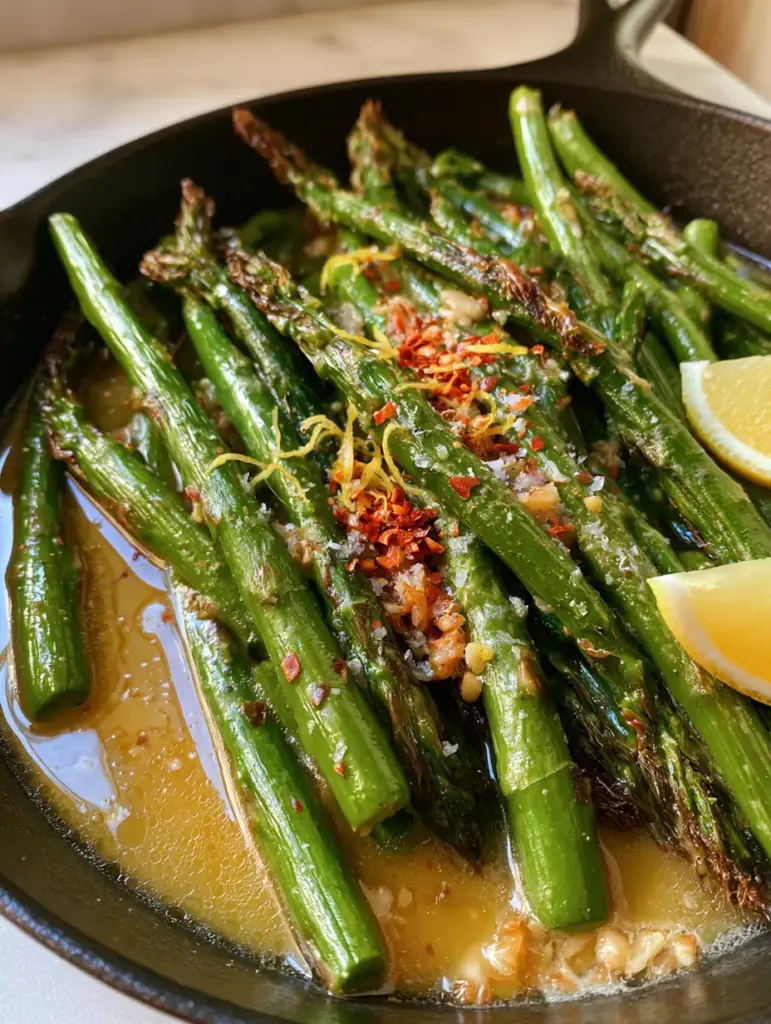
How to Sauté Asparagus with Garlic and Butter: Step-by-Step
1. The High-Heat Sear
Place your matte black cast iron skillet over medium-high heat. Add the neutral oil. Once the oil is shimmering and just starting to wisps a tiny bit of smoke, add the asparagus stalks in a single layer. Do not crowd the pan; work in batches if necessary.
Let them sit undisturbed for 2-3 minutes. You want to hear that aggressive sizzle. This creates the Maillard reaction—the browning that equals flavor. You should see charred tips and dark spots on the skin.
2. The Garlic Butter Infusion
Reduce the heat to medium. Move the asparagus to the edges of the skillet and drop the 3 tbsp (42g) of butter into the center. As it melts and begins to bubble, add the minced garlic and red pepper flakes.
Use a spoon to baste the foaming butter over the asparagus. The garlic should turn a toasted golden brown but be careful not to let it turn dark brown or black, as it will become bitter. This process should take about 60-90 seconds.
3. The Flavor Finish
Turn off the heat. The residual heat of the cast iron will continue to cook the butter. Sprinkle the fresh lemon zest over the top. The heat will release the citrus oils, creating an incredible aroma. Toss the stalks one last time to ensure they are coated in the shimmering pool of melted golden garlic butter.
Add a generous dusting of flaky sea salt and freshly ground black pepper. The small bubbles still dancing in the butter indicate it’s ready to serve immediately.
Expert Tips for Perfect Results Every Time
- Temperature Control: If the butter starts to smell like toasted nuts (brown butter), that’s great! If it smells acrid, it’s burnt. Control your heat by sliding the skillet off the burner if it gets too hot.
- The “Snap” Test: Your asparagus is done when it is fork-tender but still has a slight “snap” when you bite into it. It should not be limp.
- Don’t Cover the Pan: Never put a lid on your sautéing asparagus. This traps steam, which will turn your vibrant green asparagus into a dull, olive-drab color.
- Internal Link Inspiration: If you love one-pan meals, try serving this alongside sausage and sweet potatoes for a complete dinner solution.
What to Serve with Sautéed Asparagus
This side dish is incredibly versatile. Its buttery, garlicky profile makes it a natural partner for protein-heavy mains. It pairs beautifully with a creamy buffalo chicken alfredo pasta or a delicate spicy coconut grouper.
For a vegetarian feast, serve it alongside cheesy stuffed potatoes. The acidity of the lemon in the asparagus cuts through the richness of the cheese perfectly.
Storage and Reheating
To Store: Place leftovers in an airtight container and refrigerate for up to 3 days. The asparagus will lose some of its vibrant green color as it sits in the acid of the lemon, but it will still taste delicious.
To Reheat: Avoid the microwave, as it will make the stalks rubbery. Instead, toss them back into a hot skillet with a tiny pat of butter for 1-2 minutes until warmed through. This helps revive the charred tips.
Freezing: We do not recommend freezing sautéed asparagus. The cellular structure of the vegetable breaks down when frozen, resulting in a mushy texture upon thawing.
Frequently Asked Questions
It is not recommended. Frozen asparagus has a compromised cell structure that releases too much water, making it impossible to achieve the signature charred tips and snap.
The garlic should be a light golden brown and smell nutty. If it turns dark brown, it has burned and will taste bitter; at that point, it’s best to start the sauce over.
The key is high heat and short cooking time. Sauté over medium-high heat for only 5-7 minutes total and never cover the pan, as trapped steam softens the stalks.
No, blanching is unnecessary for this recipe. Sautéing raw asparagus directly in the skillet allows for better charring and a superior tender-crisp texture.
Line up the stalks and slice off the bottom 1-2 inches where the green color begins to fade. For thick stalks, use a vegetable peeler to remove the tough outer skin near the base.
The Full Recipe: Sautéed Asparagus with Garlic and Butter
Ready to make the best side dish of your life? Follow the detailed measurements below to recreate this Pinterest-viral sautéed asparagus with garlic and butter.
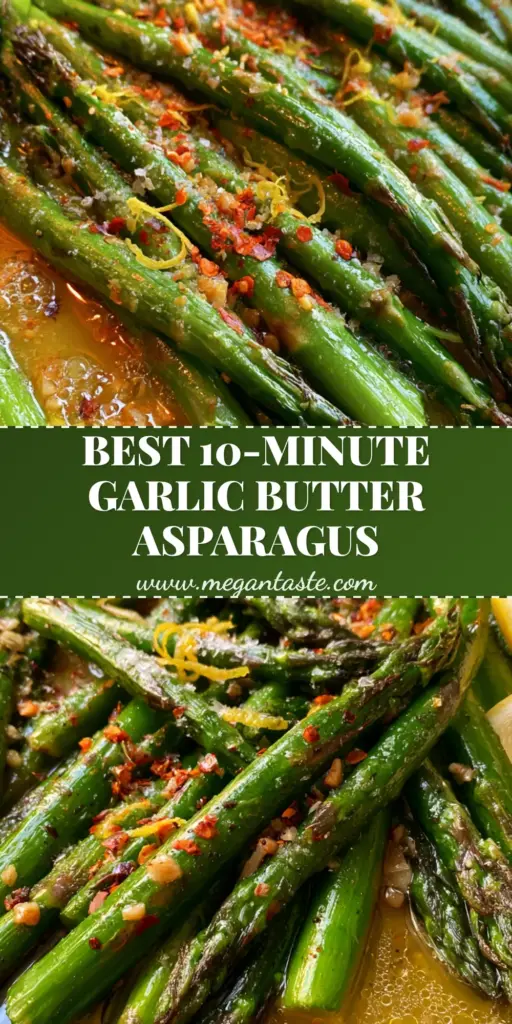
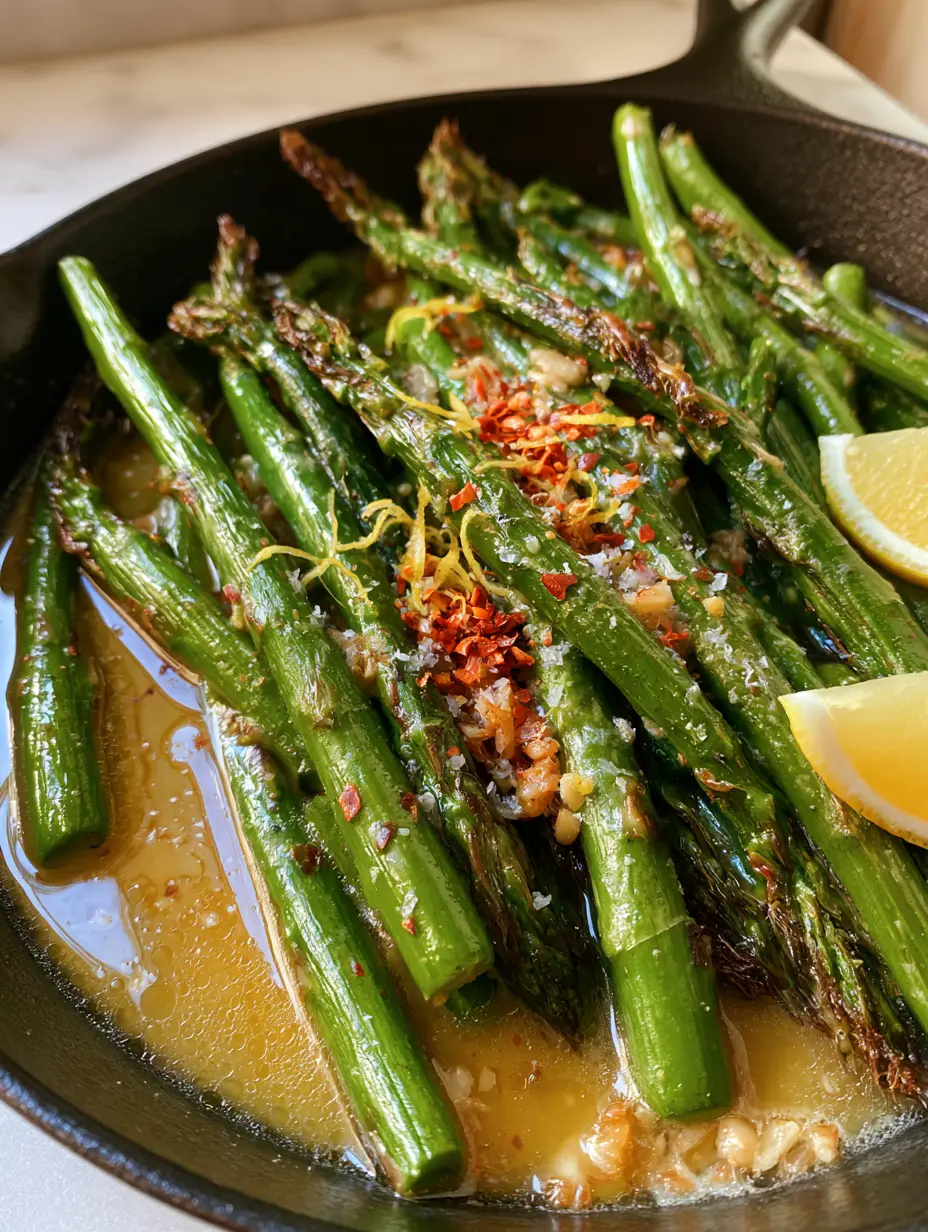
sautéed asparagus with garlic and butter: The Ultimate 15-Minute Side Dish
Ingredients
Equipment
Method
- Trim the woody ends of the asparagus (about 1-2 inches) and pat the stalks completely dry with a paper towel.
- Heat oil in a cast iron skillet over medium-high heat. Add asparagus in a single layer and sear for 2-3 minutes until charred tips appear.
- Reduce heat to medium. Add butter, minced garlic, and red pepper flakes. Baste the foaming butter over the asparagus for 60-90 seconds until garlic is toasted.
- Remove from heat. Add lemon zest, flaky sea salt, and black pepper. Toss to coat in the shimmering golden butter.
Notes
Use a cast iron skillet for the best heat retention and char.
Join the Community!
Did your asparagus come out perfectly tender-crisp? We want to see! Save this recipe to your “Healthy Sides” board on Pinterest so you never lose it. If you made this, please come back and leave a 5-star rating and a comment below. Taking a photo? Tag @megan_taste so I can see your beautiful sautéed asparagus with garlic and butter creations! Happy cooking!